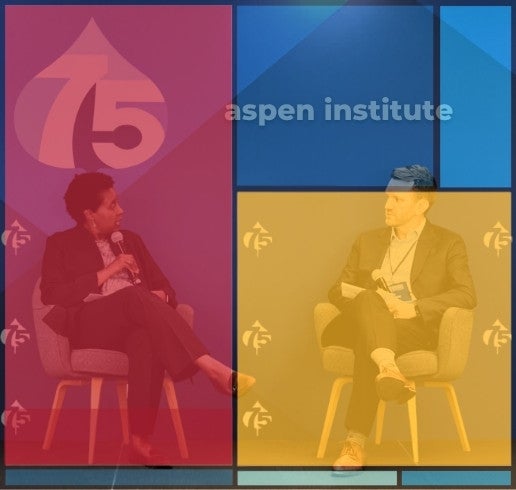
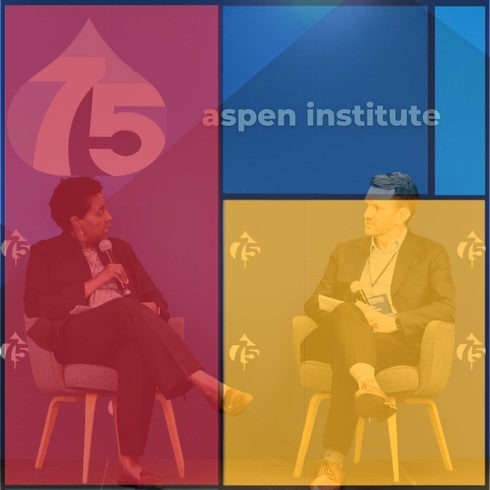
At ANDE, we often talk about the importance of building ecosystems that help small and growing businesses thrive. In a fireside chat during the ANDE Leadership Convening on April 14, Marla Blow, president and CEO of the Skoll Foundation, gave that idea concrete meaning.
In conversation with ANDE Executive Director Devin Chesney, Blow argued that today’s challenges are certainly unique, and calls for resilient leadership and contributions from across all social actors.
“We need all sectors on deck,” Blow said.
For her, that includes the private sector. Businesses cannot afford to treat social instability as someone else’s problem. Durable growth depends on a functioning society, and leaders across sectors have a stake in protecting the systems that make economic opportunity possible.
That point sits at the heart of ecosystem building. Inclusive growth does not happen because one organization runs a strong program or one entrepreneur has a compelling idea. It happens when public institutions, philanthropy, investors, and civil society help resources move where they are most needed.
Social entrepreneurs do more than deliver services
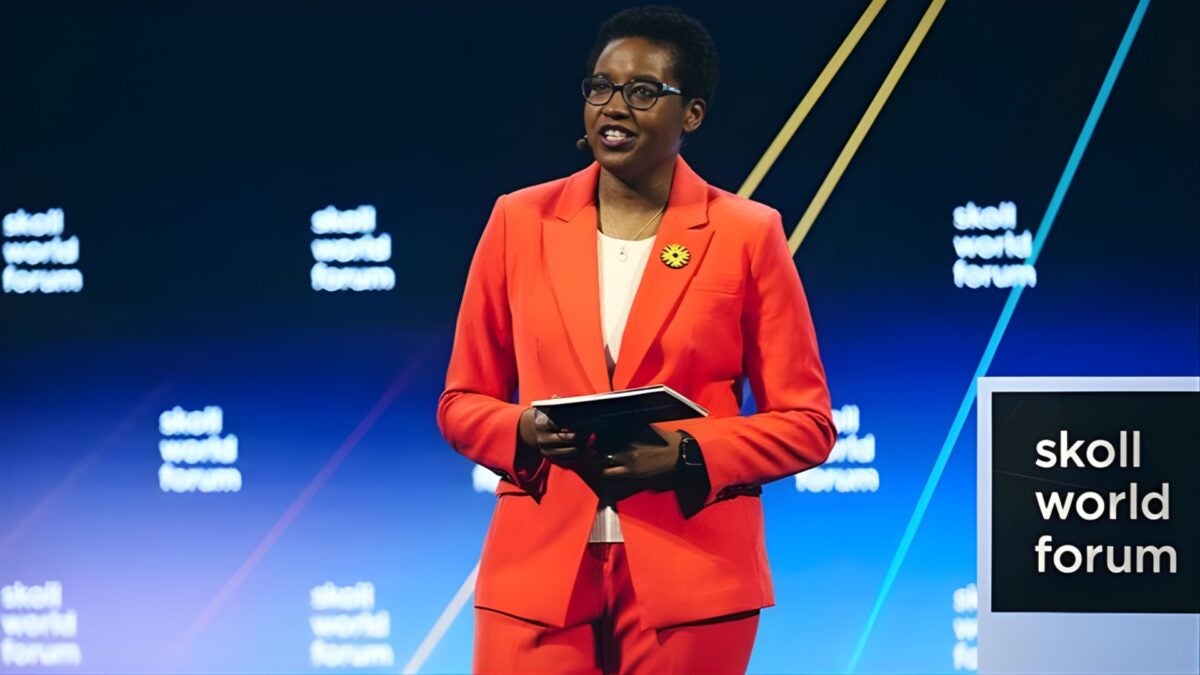 Blow described Skoll’s approach to social entrepreneurship as both practical and systemic. The strongest social entrepreneurs, she said, are not only solving immediate problems. They are also changing the systems that keep those problems in place.
“We think about people delivering services and changing the systems that they are a part of,” Blow said. “And those things have to go together to constitute a social entrepreneur in our instance.”
She pointed to Food for Education in Kenya as one example. What began with one woman feeding schoolchildren grew into a logistics, sourcing, and delivery model that now reaches millions. By linking school meals to local farmers, jobs, and government adoption, the organization moved beyond service delivery toward lasting systems change.
She shared a second example in Rwanda, where EarthEnable has worked to replace dirt floors with sealed flooring made from locally sourced materials, improving health outcomes while creating livelihoods for local masons. What began as a housing solution became a broader intervention touching health, income, and access to finance.
Ecosystem building is not abstract. It is about helping promising solutions connect to supply chains, institutions, talent, finance, and policy support so they can scale.
The sector needs capital that is willing to move
Blow also challenged large institutions to match interest with action. Reflecting on conversations about building a bioeconomy fund, she described her frustration with the pace of progress. In a moment when development finance is under pressure, she said, the sector needs fewer exploratory conversations and more concrete commitments.
That same urgency, she argued, applies to philanthropy.
“I think of philanthropy
as an opportunity to de-risk
areas that are otherwise
deemed too risky for
traditional kinds of capital.
We should be willing
to bear much, much higher
risk than others.
And I have found that
to be not quite as true
as I would have expected.”
Too often, philanthropy behaves more conservatively than its mission would suggest. Instead of funding around the edges, foundations should help de-risk new approaches, absorb early uncertainty, and unlock capital that would not otherwise move.
“You are not going to grant your way to prosperity,” Blow said. “You are going to have to have businesses that are sustainable, that generate value in your local community, in order for you to change the economic outcomes in your area.”
Blow shared several examples of what that can look like in practice. Skoll has used its endowment, not just its grant budget, to back new models, including Apis & Heritage, which helps transition local U.S. businesses to employee ownership. She also highlighted WaterEquity as an example of long-term partnership: a journey from grant support to structured finance to large-scale capital mobilization for water access.
Her broader point was straightforward: if inclusive growth is the goal, capital has to support durable business models, local ownership, and long-term resilience.
A tougher environment requires more diversified organizations
The conversation also surfaced a hard truth for the development sector. With major sources of public funding in flux, grant-driven models are becoming less viable. Blow said organizations can no longer rely on thin annual grants and expect to remain resilient.
“Organizations are going to have to have multiple sources of revenue,” Blow said. “They’re going to have to have other kinds of partners. They’re going to have to be able to generate something that allows them to keep going for at least some component of their work.”
That theme will also shape this year’s Skoll World Forum, which Blow described not just as a convening, but as a space for serious conversations about resilience, consolidation, and what it will take to navigate a more demanding funding environment.
From ideas to execution
For ANDE’s community, the takeaway was timely. If inclusive growth is the goal, ecosystem building cannot stop at good intentions. It has to help capital, knowledge, partnerships, and policy support move faster to credible intermediaries and growth-ready entrepreneurs.
Blow’s message was ultimately one of disciplined optimism. This moment may be difficult, but it is also a chance to build stronger pathways between sectors, back leaders who are solving real problems, and create the conditions for more durable growth.

Thank you!
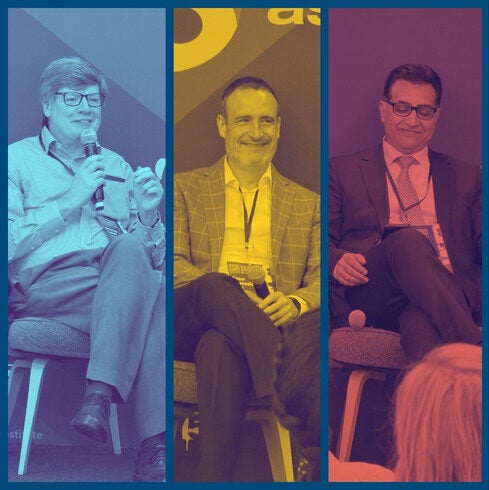
We wrapped the ANDE Leadership Convening in Washington, D.C.—and we left with what we came for: clear progress on the goals we set and strong momentum to carry the work forward. Thank you to everyone who made it possible—participants, featured speakers, and discussants—for showing up ready to share candidly, test assumptions, and build practical collaboration.
Visit our blog to read more takeaways and interviews .
Interested in ecosystem transformation and not an ANDE member? Learn more about the benefits of membership. Subscribe to ANDE’s newsletter for updates on the agenda, speakers, and registration for the Global Annual Conference 2025.