At the Aspen Institute, donor leaders discussed shifting capital, stronger local ownership, digital finance, and why adaptation will define the next decade.
On April 14, 2026, ANDE convened a session on how donor priorities are shifting and what that means for the small and growing business (SGB) sector. The feeling from the room: the pace of change is outrunning the sector’s ability to respond.”
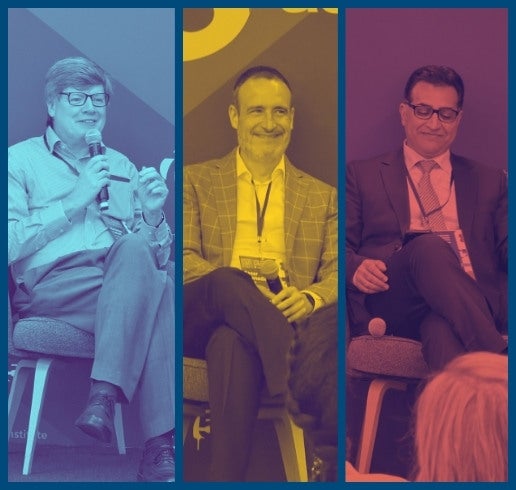
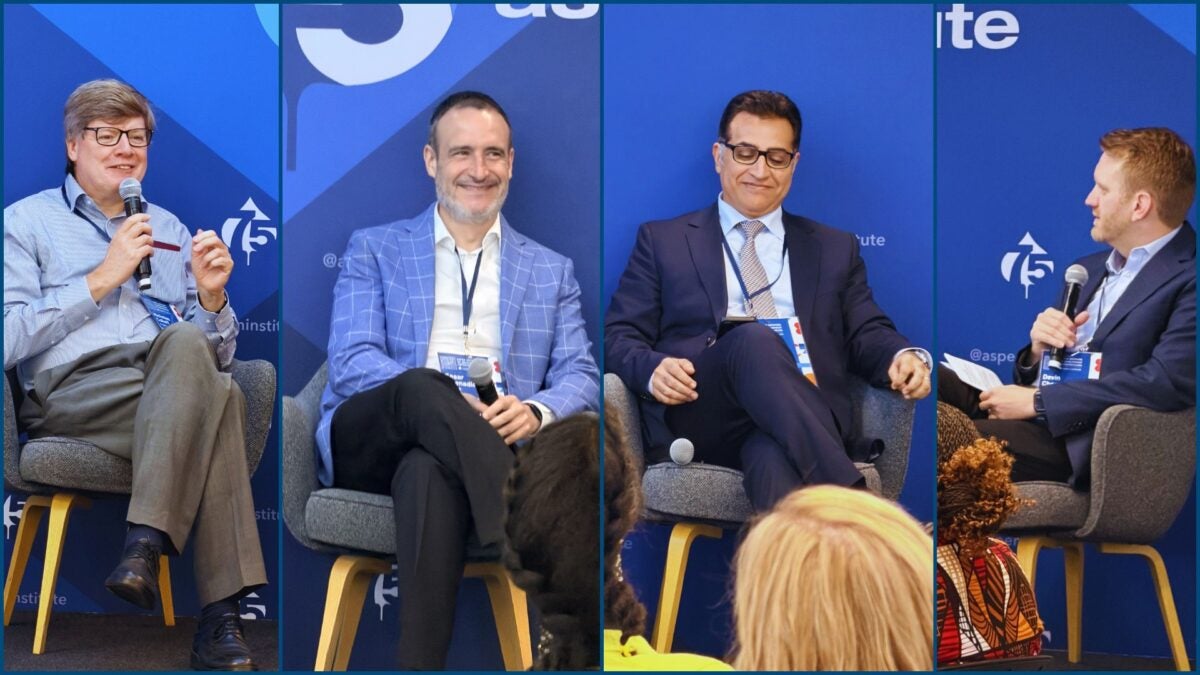
The session featured César Buenadicha of IDB Lab, Nicholas Colloff of the Argidius Foundation, and Qamar Saleem of the SME Finance Forum, who examined this period of rapid transformation from the donors’ perspective.
Devin Chesney, ANDE’s Executive Director, acting as the moderator, opened by naming the mood: “Upheaval,” he said, “there’s a lot of it”. USAID’s retreat dominated headlines for months. Now it is wars, price shocks, and a financial system recalibrating in several places at once. In that context, the panel focused on what ecosystem actors should do next.
Philanthropy matters. It is also smaller than people think.
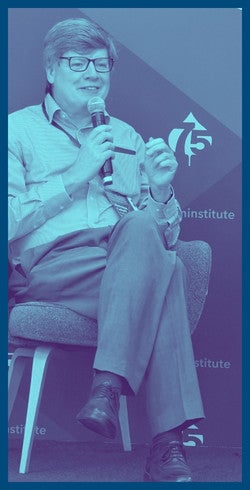 Nicholas Colloff observed that philanthropy has rarely been this popular among bilateral funders seeking partners. However, he urged caution in looking to philanthropy as a solution and the expectation that it can replace lost aid budgets. Colloff tried to explain the basic arithmetic problem using a friend’s line that he has found hard to shake: “Philanthropy is basically a rounding error in financial flows.”
What philanthropy can do, he suggested, is open up new forms of collaboration, including with funders outside the traditional Development Assistance Committee (DAC) donor community, such as emerging financial flows from the Middle East, which operate on different terms and require a new learning process.
A related shift is underway inside bilateral donor programs. Colloff pointed to a Swiss development initiative running across the Balkans, Asia, and Latin America, now being redesigned so that responsibility for entrepreneurial support shifts to the countries themselves. Most of those countries are middle-income. Entrepreneurial support services are a public good in most economies, he argued, and middle-income countries that value them should expect to fund them — the way Switzerland and the United States fund theirs.
“Forget the eco”

César Buenadicha of IDB Lab took the argument further. The funding shift is real, but it is not the deepest change. He suggested thinking about “the system approach.” Buenadicha explained that systems around entrepreneurship, public finance, and innovation are being reshaped at the same time. For him the need is to “try to see what is our role, not in the system that used to be before, but in the system that is coming.”
He offered a visual metaphor that may help explain some dizziness and confusion about how to operate right now: Picture a ball rolling inside a basin. Stability is the ball settling into the bottom. Now the ball is moving faster, and the basin itself is changing shape. Both dynamics are running at once, which is why familiar interventions are producing unfamiliar results. “We need to really adapt and think forward,” he urged.
For Buenadicha, that means designing interventions that connect early innovation to long-term capital pathways, particularly in areas where governments already have a financial incentive to act. He named aging populations as one example: across Latin America, ministries of finance are watching longevity costs climb and looking for interventions that can credibly reduce them. Climate resilience is another.
Disciplined, not frozen
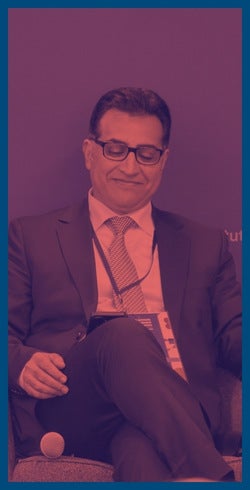 Qamar Saleem, Global Head of the SME Finance Forum, described a financial sector that has tightened its posture without losing ambition. “I don’t think there’s a sense of panic, but there’s an emergence of balanced and risk-mitigated growth,” he said. Digital lenders, once the “grow at all cost” end of the market, are moving toward measured growth, stronger governance, and more credible impact measurement. Rising losses in several portfolios are part of the story.
Scale, Saleem argued, is still the only way to reach the smallest enterprises economically. But scale depends on more than credit. “There are four things that are needed: access to finance, access to markets, access to skills, and access to an enabling environment.”
Digital infrastructure, blended finance, and AI-assisted underwriting are each lowering the cost of reaching borrowers who used to be uneconomic to serve. Saleem pointed to digital lenders already originating 45 percent of SME lending in the U.S. and U.K., and to a cross-border tokenization pilot with the Asian Development Bank as examples of where the model is heading.
The public-sector case is stronger than many assume
 Devin Chesney posed a question donors rarely ask out loud: Shouldn’t domestic governments fund this work themselves? The numbers, he suggested, are more persuasive than the sector gives them credit for.
The best-performing entrepreneur support organizations generate 8 to 10 times the return on investment. At typical tax rates, that return delivers roughly the same amount back to the state that funded it. “It’s an interesting way to think about how to convince more governments to engage in this conversation,” he said.
That matters because the current conversation treats ecosystem support as a donor problem. Framed as a public finance problem, it looks different. Governments, development finance institutions, and corporate partners all have reasons to keep the most effective organizations standing and to provide the support they need.
What comes next
None of the panelists offered a forecast. Instead they presented a working posture: treat this period as a reset rather than a downturn, design for systems that are still forming, and pay closer attention to which organizations are worth keeping. ANDE’s Leadership Convening opening plenary the day before, Foreign Assistance at a Crossroad, made a parallel argument from the policy and implementer side: the sector is being reconfigured, not simply constrained, and that the organizations reading the shift accurately will have room to rebuild.
Colloff put it most directly during the audience Q&A. New financial instruments may arise: “There’s no reason why one can’t think of the kinds of structures that have emerged around financial inclusion shouldn’t emerge around SME financing as an asset class going forward.” Asked what the sector should do less of, he named youth entrepreneurship programs; the jobs, he pointed out, are created by firms run by people over 30. But the underlying argument was broader: the reset will require honest judgment about which programs work, which do not, and which organizations deserve to continue. “One just hopes that it’s the good organizations, the effective organizations that succeed, and it’s the less effective ones that fail. But that’s of course not guaranteed.”
Back into the Future
Each speaker shared a vision for moving forward and anticipating what is coming.
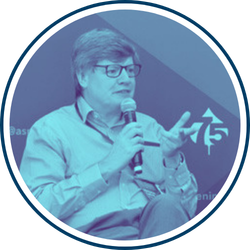 “My next target is youth entrepreneurship programs. Because they are a diversion of key resources. To actually help young people into jobs, we need to target those 15 percent of firms that create 85 percent of the jobs. Those are not run by people under 30.”
 “Either you become more human or you become more digital, or you do both things. I think the critical question for us is: What are you going to do that is going to make you more relevant as a human connection?”
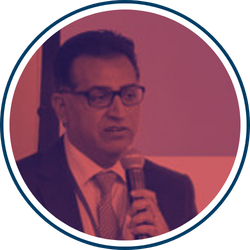 “A lot more funding needs to flow into transfer of best practices. I don’t think we do that enough. In most of the countries I see, it’s a lot of reinventing the wheel.”
Thank you!
We wrapped the ANDE Leadership Convening in Washington, D.C.—and we left with what we came for: clear progress on the goals we set and strong momentum to carry the work forward. Thank you to everyone who made it possible—participants, featured speakers, and discussants—for showing up ready to share candidly, test assumptions, and build practical collaboration.
Visit our blog to read more takeaways and interviews .
Interested in ecosystem transformation and not an ANDE member? Learn more about the benefits of membership. Subscribe to ANDE’s newsletter for updates on the agenda, speakers, and registration for the Global Annual Conference 2025.