At ANDE’s 2026 Leadership Convening, a policymaker, a global implementer, and an East African ecosystem leader described a sector being remade in real time and the choices that will determine who rebuilds it.
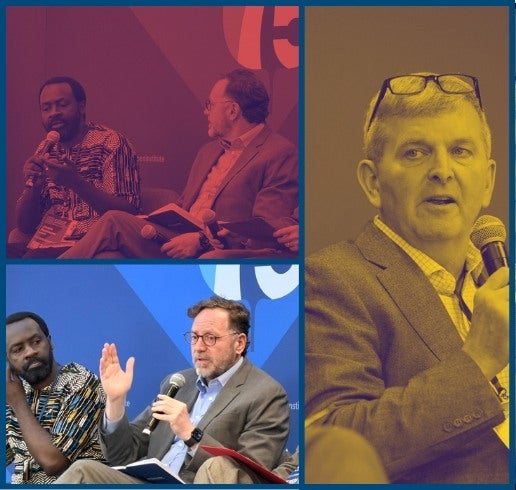
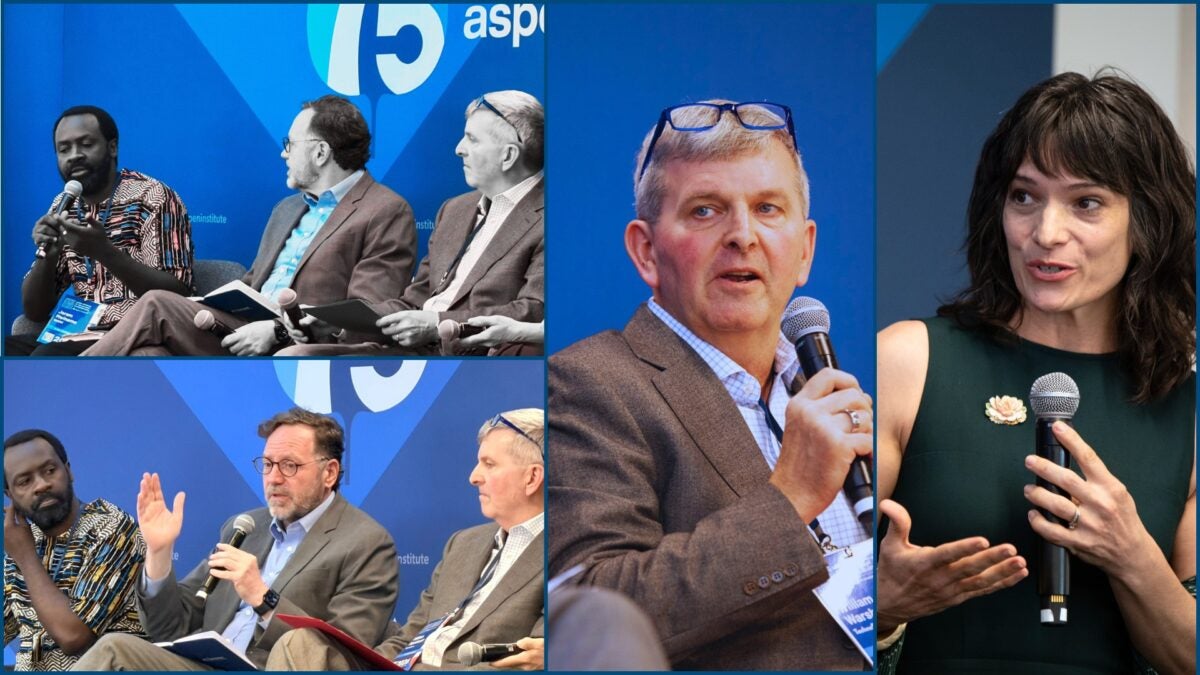
The April 13 opening plenary at ANDE’s 2026 Leadership Convening, “Foreign Assistance at a Crossroads,” brought together three perspectives on a sector under pressure: James Mazzarella, Senior Director of the Freedom and Prosperity Center at the Atlantic Council; William Warshauer, President and CEO of TechnoServe; and Joram Mwinamo, CEO of SNDBX | The Village Formula. Kate Scaife Diaz, ANDE’s Director of Global Programs, moderated.
Across the conversation, four reconfigurations came into focus:
- how foreign assistance is framed,
- how risk is carried,
- how locally led approaches are structured, and
- how evidence is used.
The panelists agreed that none of the four is fully resolved. Each carries real consequences for small and growing businesses (SGBs) and the organizations that support them.
A landscape remade in a year
A year after USAID was dismantled and some of its work folded into the State Department, the sector is still absorbing what the shift means in practice. James Mazzarella, whose Atlantic Council Freedom and Prosperity Center has been tracking the emerging U.S. foreign assistance framework, set out the trajectory plainly, while pointing to a future where more foreign assistance funding will continue to evolve:
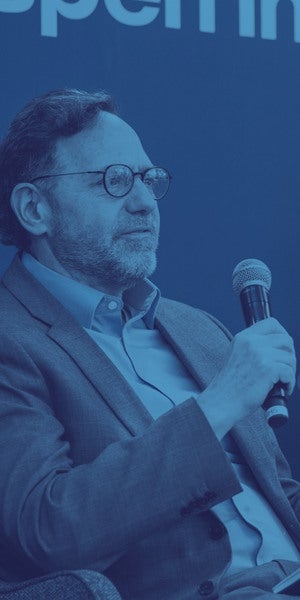 “The pendulum has swung to the other side, where the only reason for being for some of these programs is the exact transactional ‘quid pro quo’ of the dollars being spent. That system is not going to stay that way forever.”
The practical implications for implementers are severe. William Warshauer, whose organization weathered the transition with roughly 30 percent U.S. government exposure, did not soften the human cost:
“Recent estimates are that half a million to a million people are now dead because of the disappearance of U.S. foreign assistance in the way it was done.(1)“
Programs that survive, he argued, will be measured by execution under constraint, not intent.
The capital question DFIs are not answering
Both U.S.-based speakers were direct about a structural problem: Development Finance Institutions have drifted from the risk profile they were created to carry.
“The DFIs are so wedded to their returns that they are no longer taking the risks they were created to take. They are now as focused as a private investor on risk-adjusted returns, which is absolutely unhealthy and ‘off-mission,'” Warshauer said.
Mazzarella argued the Development Finance Corporation (DFC) and its peers should change posture. They must become “deal originators” and “wholesalers” that find or build funds capable of reaching SGBs, rather than behaving like conventional bankers. The critique points to an opening for organizations in the ANDE network: credible pipelines, shared standards, and ecosystem intelligence are exactly what de-risks the kinds of deals DFIs say they cannot find.
Localization as durability, not a label
From Nairobi, Joram Mwinamo pushed back on the assumption that the moment is purely one of loss:
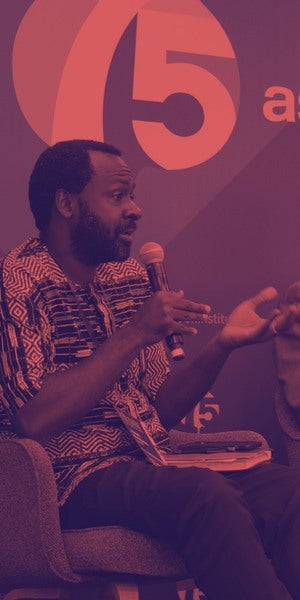 “We are finally at a table on an equal footing where we can have a one-on-one conversation about what really needs to be done. We are the continent for the future.”
He pointed to accountability gains as governments face more citizen scrutiny of public budgets, to the rise of corporate foundations with local perspective (Safaricom Foundation, Equity Foundation), and to local high-net-worth capital beginning to organize. Locally led approaches, in his telling, are not only a values statement. They are an operational advantage: solutions designed close to entrepreneurs and markets fit better and hold up longer when conditions shift.
Now that including local partners is becoming common practice, Warshauer and Mazzarella wholeheartedly agreed the need is to develop best practices to build structures where local organizations lead, and where funding and accountability models reinforce that leadership.
As Mwinamo expressed it: “I don’t think there’s been a bigger opportunity than right now to craft new types of partnerships and mobilize new types of capital. I see a real opportunity to reset and come back with models that have a better focus on impact.”
Evidence that changes decisions
Foreign assistance faces an evidence paradox. Demand for proven impact is rising at the same time that volatility makes linear planning less reliable. “If you can’t measure something, you can’t see it,” said Mazzarella, offering the underlying principle.
His Freedom and Prosperity Center has been building indexes to track accountability, economic freedom, and rule of law across countries. He argued that those are the conditions that most reliably correlate with growth.
For ANDE members, the practical corollary is familiar: better measurement is how ESOs surface what works in their ecosystems and where the bottlenecks sit. Monitoring practices become critical to determine which interventions justify continued investment.
Partnership as working infrastructure
Across all four threads, one question kept surfacing: how partnerships are structured when expectations are rising faster than delivery systems are adapting. Implementation timelines are shorter, reporting demands are heavier, and there is a narrower risk tolerance.
Coordination is no longer enough. Warshauer framed the shift in mindset required:
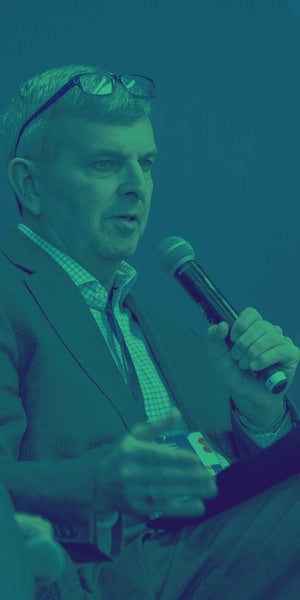 “Development work should be about systems, not projects. It starts with an analysis of the root causes of why a system is not functioning and finding local actors to address them.”
That systems view has a practical continuity: once you understand why a system is not functioning, the question becomes who you build with to change it, and on what terms. Partnerships that hold up under current conditions clarify decision rights early, share risk honestly, and leave room to course correct. For ESOs operating inside those systems, the redesign is already underway. Mwinamo described how SNDBX has been rebuilding its own partnership base:
“We had already started looking at more sustainable models: diversifying revenue streams, looking at different partnerships beyond just donors—like corporates and academia—and seeing to what extent SGBs can pay for some services.”
Fewer single-donor dependencies, more actors at the table and more of the cost carried by the system the work is meant to serve. In that framing, partnership architecture is not a supplement to the work. It is how the work gets done.
What ecosystem leaders can do now
Asked for a single strategic move for the next 18 months, each speaker urged participants to take action. Together, the three moves describe an agenda: analyze the system, map the barriers, share what works.
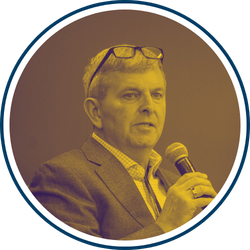 “Find the local actors who can improve those systems in a cost-effective way.”
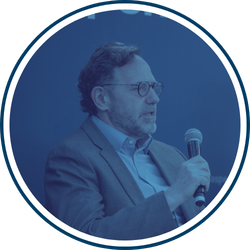 “We need to know what the regulatory and non-regulatory barriers to growth are for SGBs.”
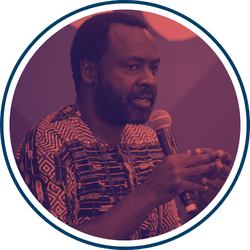 “Collate the research and data and diffuse that across the network. There is a hunger to learn and adopt models that work within local ecosystems.”
The reset
 The foreign assistance landscape is not simply tightening. It is being reconfigured by geopolitics, by fiscal realities, by the retreat of institutional risk-taking, and by the rise of local actors ready to carry more of the weight. For organizations working to strengthen entrepreneurship ecosystems, that reconfiguration is an opening.
The sector that emerges will reward those who read the shift accurately: who treat local leadership as durability rather than delegation, who use evidence to sharpen decisions rather than document them, who build partnerships as architecture, and who insist that capital behave like capital-for-development again.
That is the conversation ANDE’s 2026 Leadership Convening opened.
(1) Warshauer’s figures align with two widely cited estimates: Boston University epidemiologist Brooke Nichols’s ongoing mortality tracker, which by April 2026 estimated that the dismantling of USAID had already caused approximately 800,000 deaths (two-thirds of them children), and The Lancet study by Cavalcanti et al. (2025), which projected more than 14 million additional deaths globally by 2030 if current funding cuts hold.
Thank you!
We wrapped the ANDE Leadership Convening in Washington, D.C.—and we left with what we came for: clear progress on the goals we set and strong momentum to carry the work forward. Thank you to everyone who made it possible—participants, featured speakers, and discussants—for showing up ready to share candidly, test assumptions, and build practical collaboration.
Visit our blog to read more takeaways and interviews .
Interested in ecosystem transformation and not an ANDE member? Learn more about the benefits of membership. Subscribe to ANDE’s newsletter for updates on the agenda, speakers, and registration for the Global Annual Conference 2025.