Knowledge Hub
Critical insights and guidance for the SGB sector.

Search or filter below to discover research, tools, and guidance on supporting SGBs.

This content is also available in: Español, Português

To request your reports, briefs, and other resources to be posted on the knowledge hub

Knowledge Hub
Resource Type
Sector
Theme
Region
Language
83 results found

This evaluation tracks whether and how the Access to Green Finance (A2GF) program, running in India and Kenya since 2022 with funding from the IKEA Foundation, shifted investor knowledge, perception, and behavior in the waste management and circular economy sector and where those changes can be linked to ANDE's activities versus other factors.

See resource

This report presents three case studies commissioned by ANDE as part of the Access to Growth Finance (A2GF) Perception Mapping Evaluation, conducted by Populi LLP.

See resource

The Indian Apparel and Textile sector is at an interesting crossroads as the Ministry has set ambitious targets for both international and domestic markets. As the Industry gears up to deliver on these targets, sustainability and circularity become an important lever for the growth and development of the sector. However, this development needs to account for the unique set up of the Indian industry and explore cluster level initiatives. This is the time for the industry to lead the narrative on sustainability and define the roadmap for a collaborative and sustainable development.

See resource

Electric Vehicles (EVs) are the cornerstone of the global transition towards sustainability. India's ambitious climate commitments make EVs not just an environmental imperative, but an economic opportunity. They represent our path to both decarbonization and energy independence, while providing opportunity to accelerate innovation and manufacturing.

This report comes at a crucial time when India's EV charging landscape is at an inflection point. The challenges we face are unique – from installing charging points in crowded urban areas to building networks that withstand everything from Rajasthan's heat to Kerala's monsoons. 'Charging Ahead-Part II' delves into the intricate interplay of policy, regulation, and industry trends shaping this crucial segment, providing cross-jurisdictional analysis that contextualizes India's efforts within a global framework. The insights from markets like California, Singapore, and the UK offer invaluable lessons for our path forward, from integrating renewable energy to deploying innovative business models. The collaboration between GameChanger Law Advisors and Speciale Invest in producing this report
exemplifies the interdisciplinary approach needed to build a sustainable future.

See resource

A new report, Just Climate Transitions in Bangladesh: Accelerating Multistakeholder Action in Textile and Apparel and Construction Industries, examines how Bangladesh can pursue low-carbon growth while protecting workers and sustaining competitiveness.
Bangladesh’s economy expanded 24-fold between 1980 and 2023, while GHG emissions rose 176%. The textile, apparel, and construction sectors—representing 74% of industrial GDP, 80% of the industrial workforce, and around half of industrial emissions—sit at the center of a just transition challenge.

Developed with support from the H&M Foundation and Laudes Foundation, and informed by 100+ local and international stakeholders, the report identifies seven interlinked priorities and calls for coordinated action across industry, workers’ organizations, policymakers, development actors, finance, and philanthropy.

See resource

Every day, Kenya produces over 24,000 tons of waste, amounting to 8.8 million tons annually. Most of this waste is currently mismanaged, with more than 75% of waste in Kenya being incinerated or disposed at dumpsites. Moreover, Kenya is home to two of the world's 50 largest landfills – Dandora in Nairobi and Kibarani in Mombasa – highlighting its significant waste management challenges. Mismanaged waste in Kenya poses several environmental and health risks, which local actors are yet to comprehensively address. The proximity of landfills to residential areas in Kenya negatively impacts the quality of life of nearby communities and poses severe health risks by contaminating local land and water resources. In addition, waste incineration releases toxic pollutants into the air, water and soil and produces hazardous ash that can contaminate the environment and pose health risks to nearby communities. This study identified 16 small and growing businesses (SGBs) providing integrated waste management services. Employing a mixed-methods approach to conduct a deep dive into the integrated waste management sub-sector in Kenya.

See resource

This landscape guide is intended to outline India’s current context in recycling and circularity, with a focus on the investment potential, opportunities and business models in the ten most significant waste streams in India. It provides a framework for how investment potential in a waste stream can be determined, which covers five areas that define that potential: market size and growth; investable start-up pipeline; product readiness; policy support; financing needs and gaps. The guide also includes a historical outline of investments and funding in each waste stream and outlines the roles and participation of various types of equity funders, along with the potential and participation of non-dilutive funding options.

See resource

Kenya's waste management and circularity sector offers significant opportunities for investors, driven by economic growth, increasing waste generation, growing regulations and innovations. This introductory guide is the first in a series that also includes investment guides that deep dive into each of the highest opportunity sub-sectors in Kenya’s waste and circularity sector: plastic waste, wastewater, organic waste and integrated waste management. These guides provide further information on trends, opportunities, policies and challenges, as well as further details on the main identified business models and their financing needs and case studies of successful businesses.

See resource

Kenya's waste management and circularity sector is rapidly emerging as a critical area for sustainable investment. Across the ten sub-sectors and 122 businesses identified within this space in KOIS and ANDE’s Introductory Guide to Investing in the Waste and Circularity Sector in Kenya , four key sub-sectors have demonstrated particularly high potential for investment. Those sub-sectors are organic waste, plastic waste, wastewater, and integrated waste management. This investment guide outlines the complex landscape of the sector, highlighting critical financing needs and investment strategies. While detailed deep-dive guides have been developed to explore each of the four key subsectors, this guide focuses on the financial dynamics that underpin successful investments. It examines the varying financing needs across the different stages of business maturity and sub-sectors. Moreover, it highlights the key factors of success for waste management and circularity businesses, investment trends, gaps and opportunities for innovative finance solutions that could shape the sector. Finally, this guide provides insights into how investors can strategically position themselves and better catalyse investment to grow the sector.

See resource

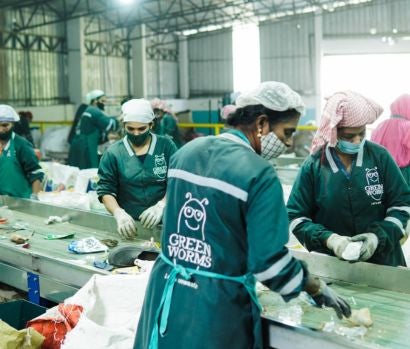
Organic waste, which amounts to 5.72 million tons every year in Kenya, spans diverse sub-categories including food waste, yard waste, animal waste, agricultural waste, wood waste, organic sludge, biodegradable waste and human waste (faecal sludge). Rural households typically compost around 75% of their organic waste, but only 25% is composted in urban areas. Although organic waste degrades quickly and does not stay in the environment, it emits methane emissions during degradation or incineration. The high prevalence of open defecation due to inadequate sanitation systems further contributes to these challenges, as only 30% of the population has access to safely managed sanitation services.Effective organic waste management can reduce greenhouse gas (GHG) emissions, deforestation and soil degradation by providing sustainable alternatives to fuel, charcoal, wood and chemical fertilizers. For instance, transforming organic waste into biogas saves about 370–400 kg of carbon dioxide equivalent (CO2e) per ton, while turning it into fertilizers saves 350 kg CO2e per ton.Given the large volumes of recyclable material and its numerous applications, organic waste management is one of the most developed waste management sub-sectors in Kenya. Out of 122 waste management and circularity businesses identified through this study, 30 deal with organic waste, most of which were established over the past decade. This study employed a mixed-methods approach to conduct a deep dive into the organic waste management sub-sector in Kenya. 
See resource

The Mastercard Strive initiative, in partnership with Business Fights Poverty, convened over 50 stakeholders to explore how to empower small businesses through digital solutions. The discussion focused on three areas: artificial intelligence and automation, access to finance and capital, and climate resilience and sustainability. This report highlights the five overreaching insights that this convening outlined that spans across all three areas to form a framework of principles that empower organisations looking to better support small businesses to navigate climate disruptions and economic uncertainties

See resource

Kenya generates 880,000 tons of plastic waste per year, comprising various subcategories such as polyethylene (PE), polypropylene (PP), polystyrene (PS), polyvinyl chloride (PVC), and polyethylene terephthalate (PET), with PET, PP and polyester being the most prevalent. The widespread use of plastic, particularly in urban areas, combined with inefficient waste management systems, leads to the pollution of water resources and severe negative impacts on marine life. Furthermore, plastic waste disposed in nature or in landfills emits greenhouse gases during its decomposition. Out of the 122 businesses identified through this study, 17 businesses operating in the plastic waste management sub-sector in Kenya have been identified, covering applications ranging from plastic waste reduction, recycling into new plastic products and waste conversion into energy. This study employed a mixed-methods approach to conduct a deep dive into the plastic waste management sub-sector in Kenya. Out of the 122 businesses identified through this study, 17 businesses operating in the plastic waste management sub-sector in Kenya have been identified, covering applications ranging from plastic waste reduction, recycling into new plastic products and waste conversion into energy.

See resource
The Knowledge Hub was developed with the generous support of: