
ANDE Access & Opportunity Inclusion Toolkit is a practical resource for embedding inclusion into your organization’s everyday systems, policies, and practices. Whether you’re in HR, operations, communications, or program delivery, it offers flexible, evidence-based frameworks you can adapt to your context – covering gender, LGBTQIA+ communities, disability, neurodiversity, ethnicity, age, and socio-economic diversity. Dip in for quick guidance or go deeper with linked resources.
We extend our deepest gratitude to Laudes Foundation for their generous support of this work. In a funding landscape where inclusion is often treated as a peripheral concern, Laudes Foundation’s commitment to centering equity and justice, and to resourcing the organizations that do, is both rare and profoundly meaningful.
- Operationalizes inclusion – Moves beyond principles to actionable steps teams can implement now
- Flexible by design – Use it as a quick reference or a comprehensive guide, depending on your needs
- Cross-functional relevance – Built for HR, operations, communications, and program teams alike
- Evidence-based – Grounded in established global guidance and proven practices
- Broad scope Addresses multiple dimensions of diversity in one integrated resource
- Adaptable – Frameworks designed to fit different organizational contexts, not one-size-fits-all
Definitions
Foundational definitions to build shared understanding
Key Points
Inclusion, Accessibility, Representation, Reasonable Accommodation, Universal Design, and DEI
Practical Considerations
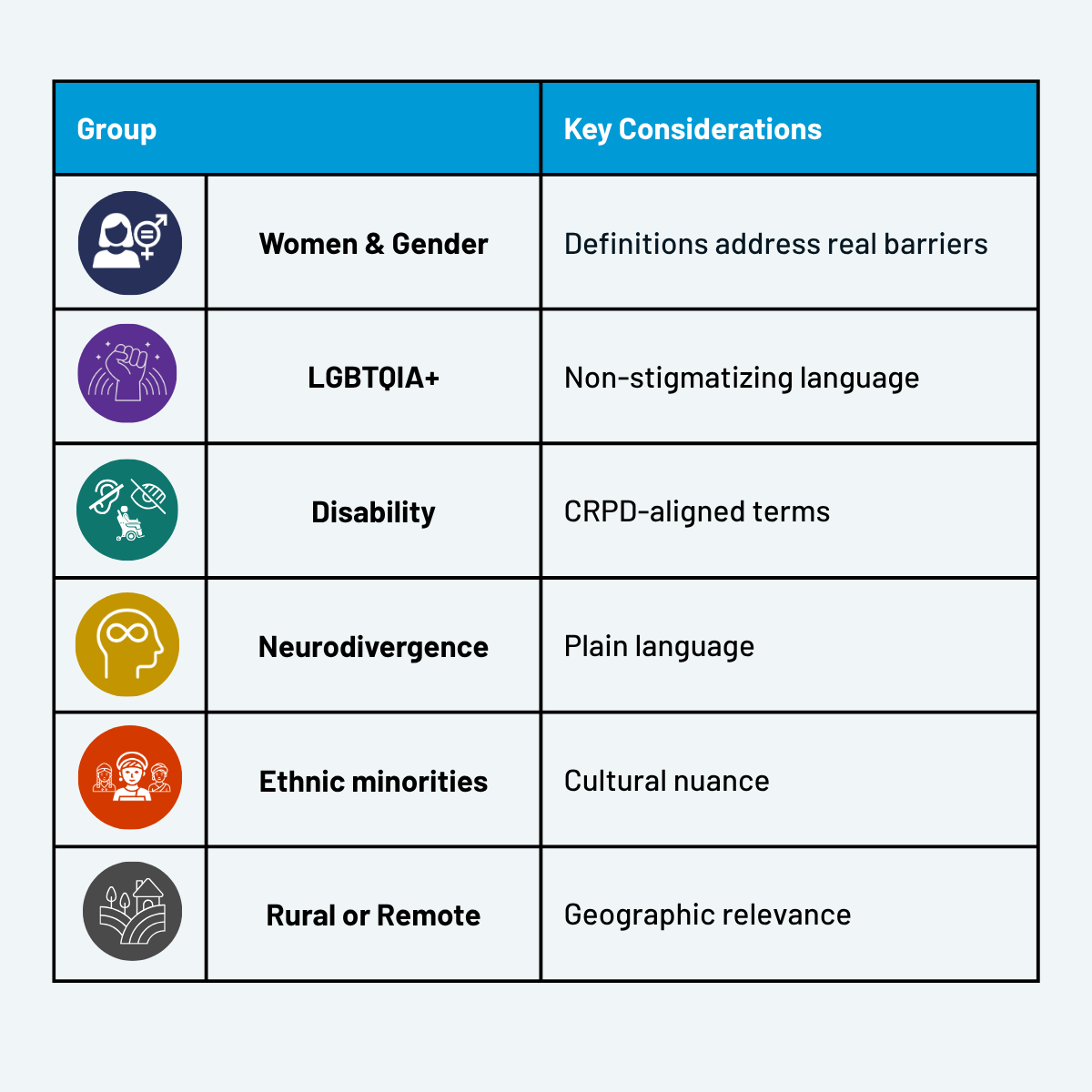
Use of Icons & Color Palette
Icons/colors improve clarity and reduce cognitive load
Key Points
Icons map to inclusion groups, Color palette improves readability, Consistent symbols reduce confusion, and Supports navigation across sections
Practical Considerations
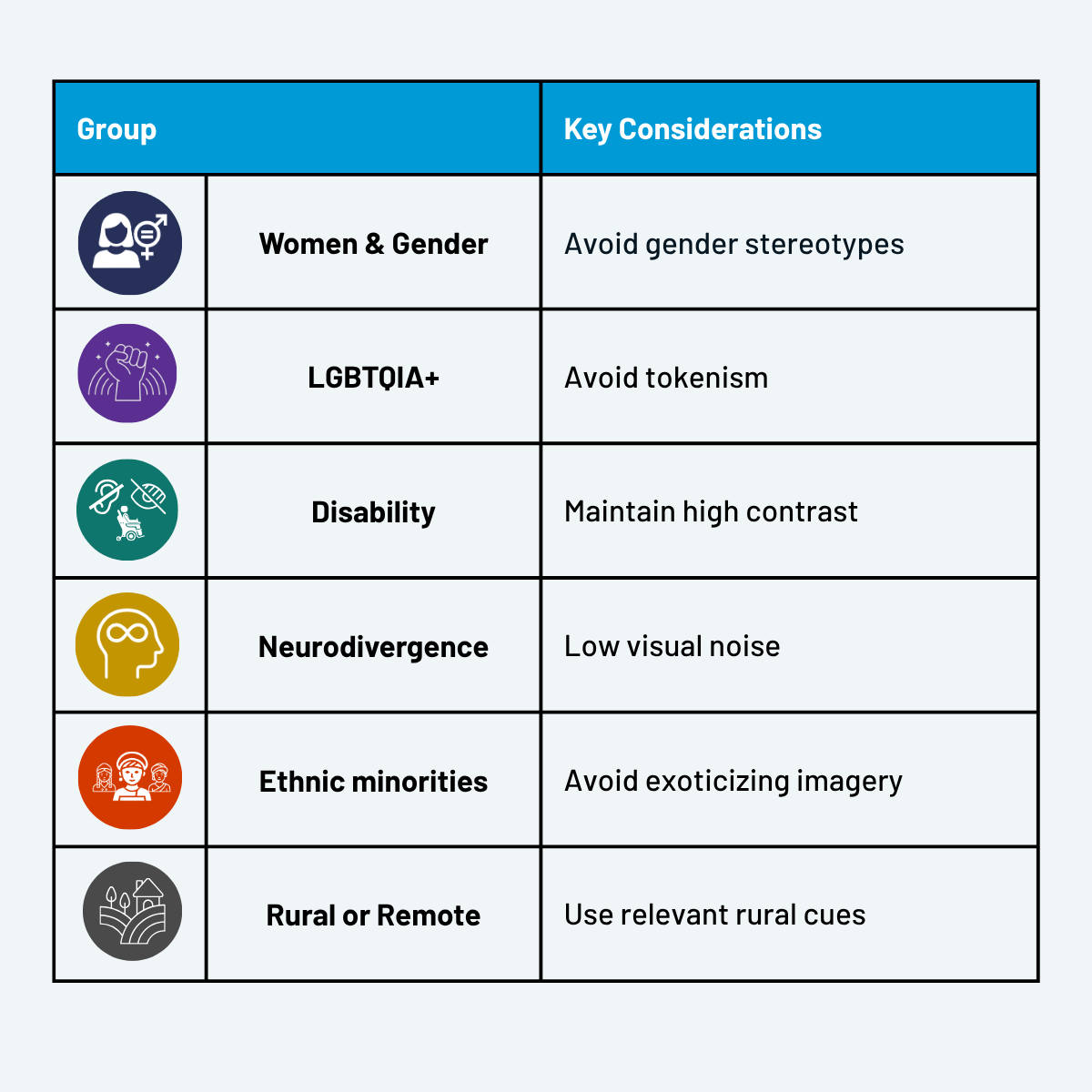
Why Inclusion Matters
The case for inclusion
Inclusion strengthens trust, culture, and program quality
Key Points
Improves collaboration, Strengthens psychological safety, Enhances program quality, and Aligns with global inclusion frameworks
Practical Considerations
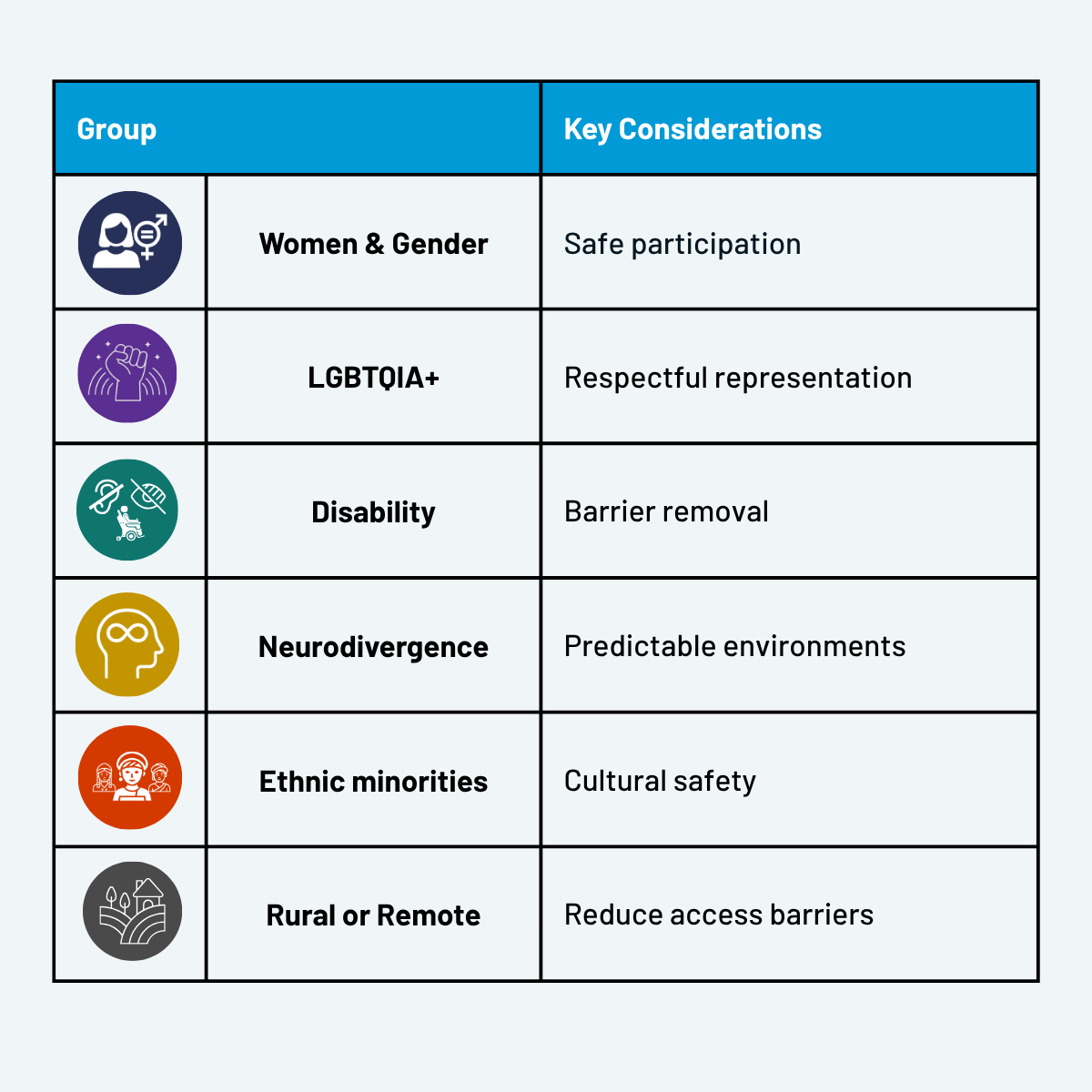
Why internal policies matter
Policies translate intention into predictable equitable practice
Key Points
Convert intentions into consistent action, Reduce bias and arbitrary decisions, Clarify rights and responsibilities, and Support accountability
Practical Considerations
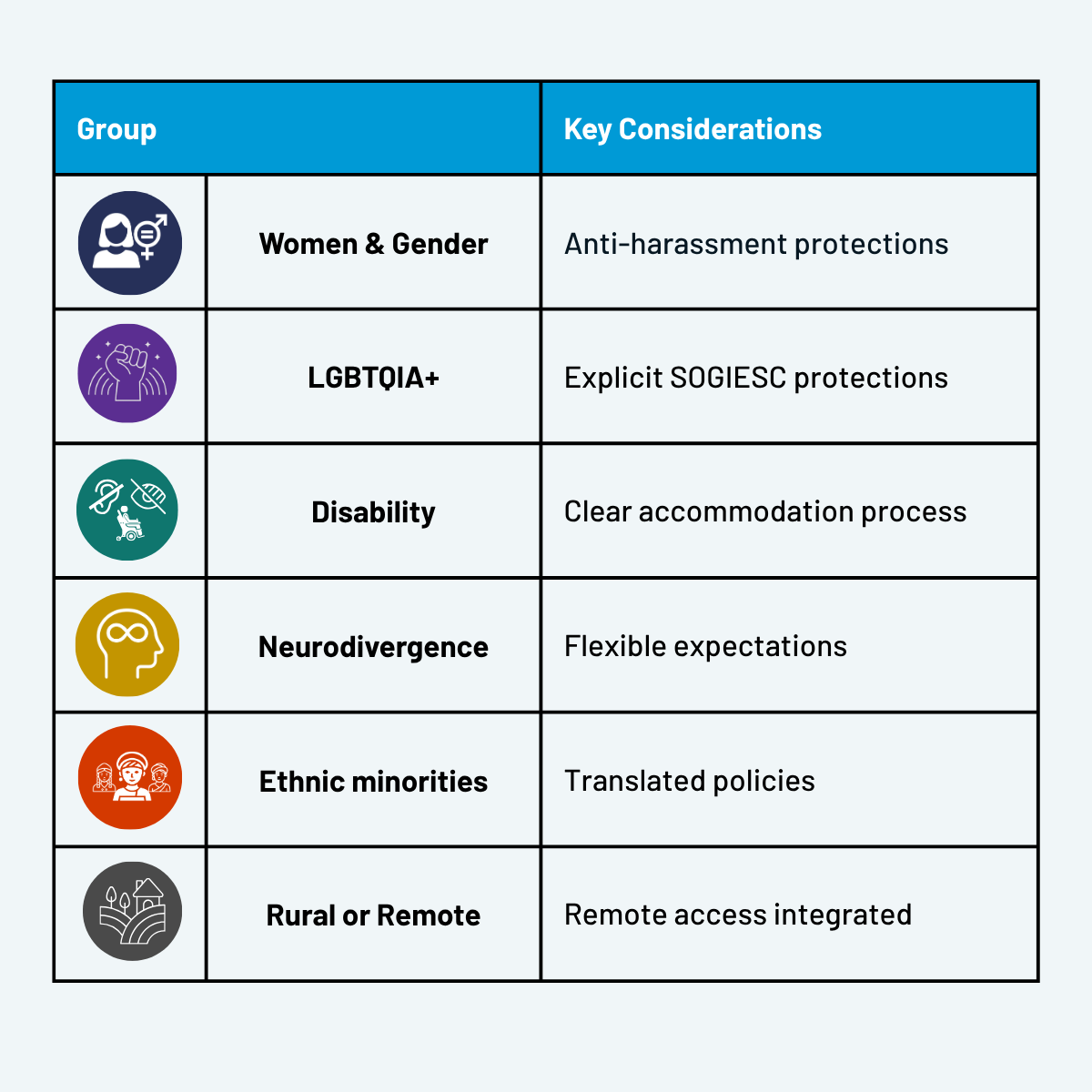
Multidimensional inclusion
Recognizing overlapping barriers across identities
Key Points
Multiple identities intersect, Avoids one-size-fits-all models, Prioritizes those facing compounding barriers, and Supports DEI best practice
Practical Considerations
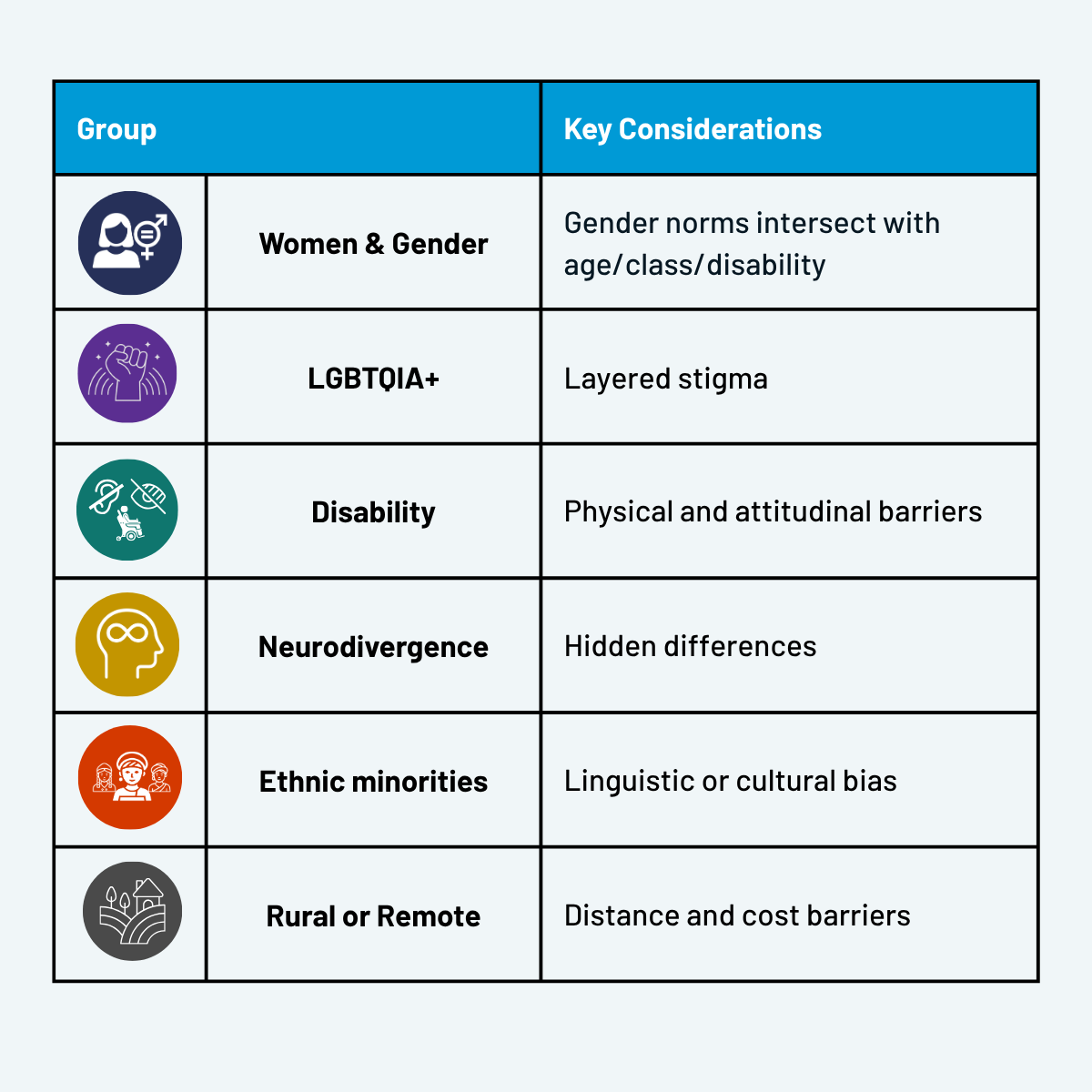
Inclusion Maturity Model
Maturity Level 1
Early awareness with informal inconsistent practices
Key Points
Basic awareness, Ad-hoc approaches, Champion-driven efforts, and No formal policy structure
Practical Considerations
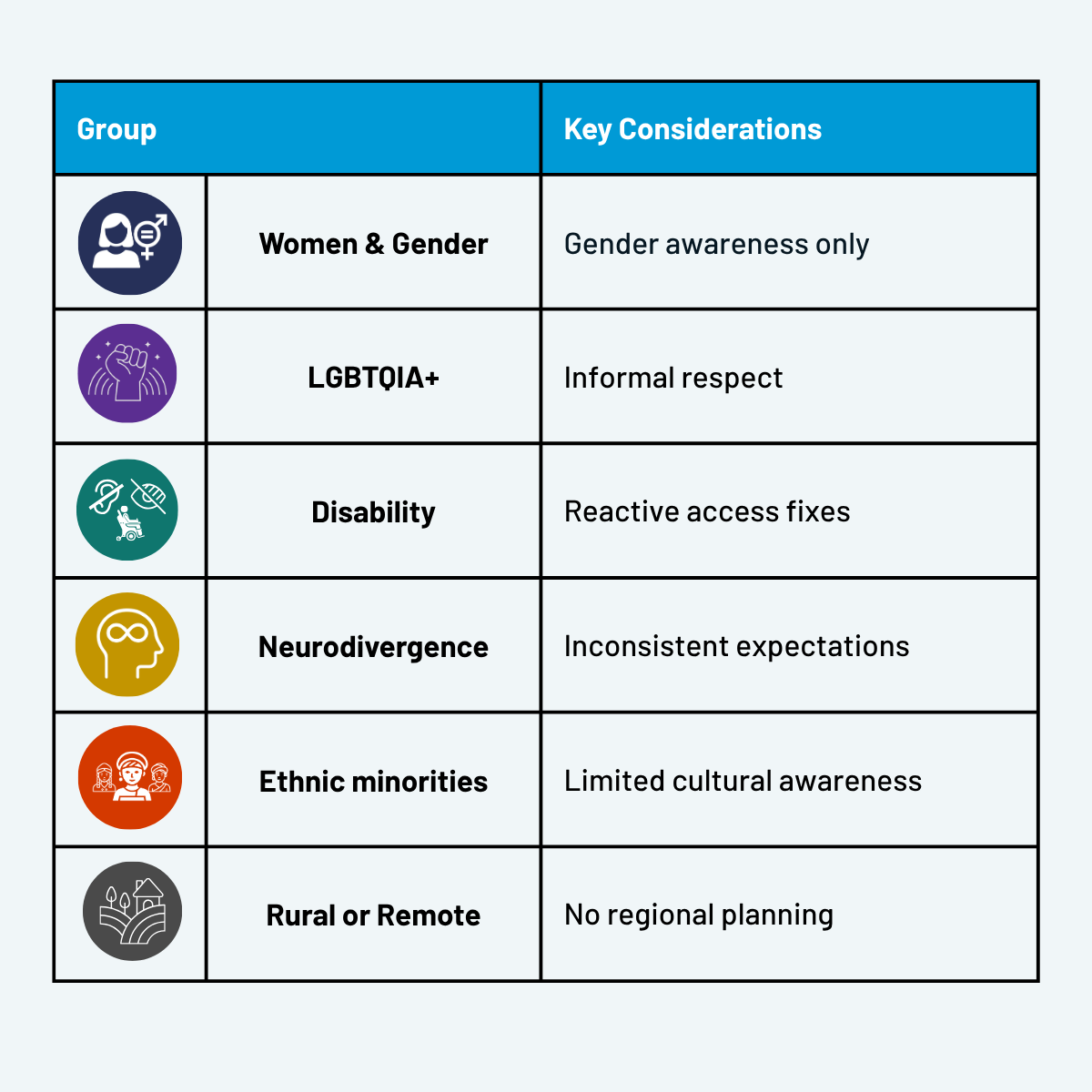
Maturity Level 2
Inclusion embedded in policies and processes
Key Points
Basic inclusion policies, Consistent workflows emerging, Early staff training, and Foundational data systems
Practical Considerations
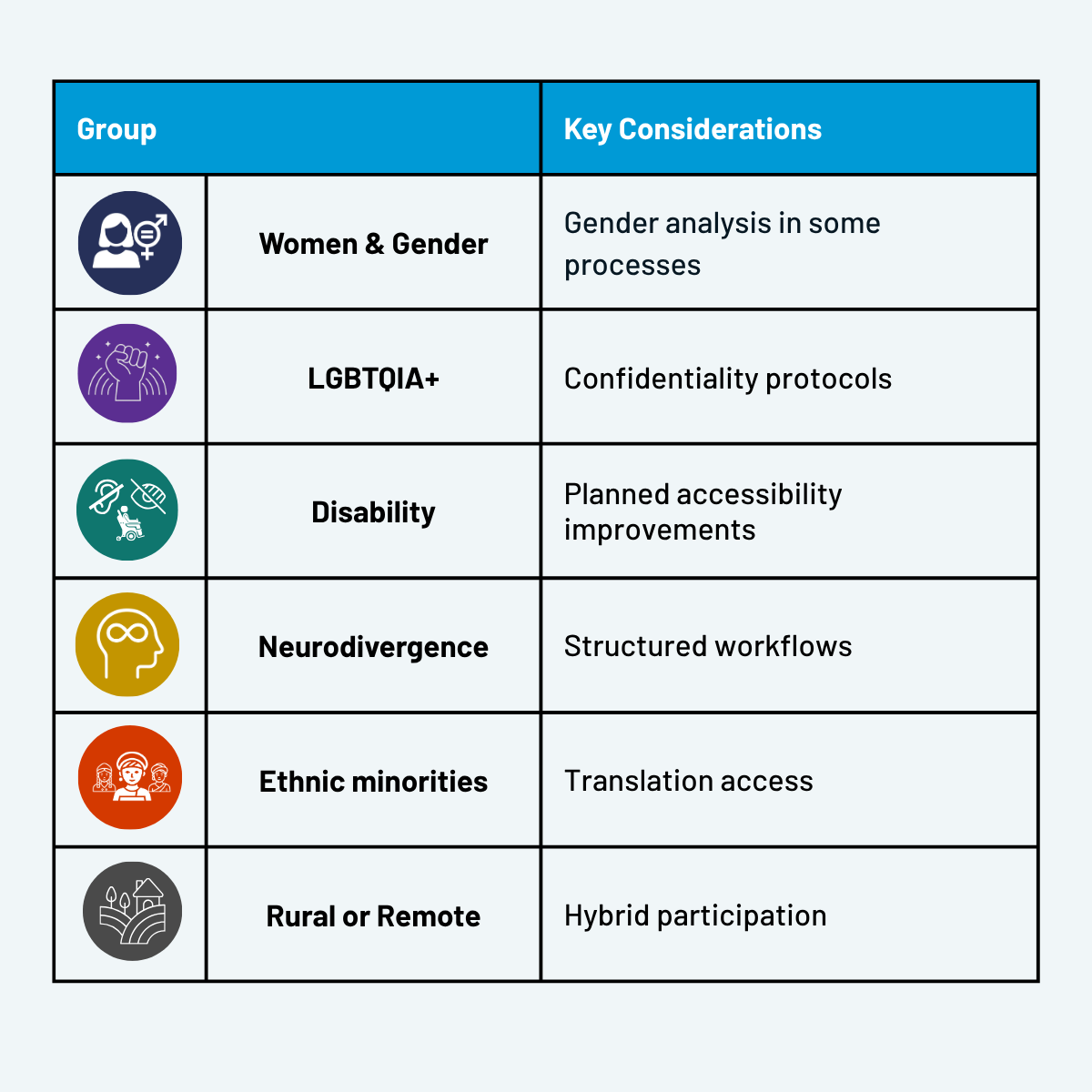
Maturity Level 3
Strategic, resourced, measurable inclusion
Key Points
Universal design embedded, Leadership accountability, Dedicated resourcing, and Progress reported publicly
Practical Considerations
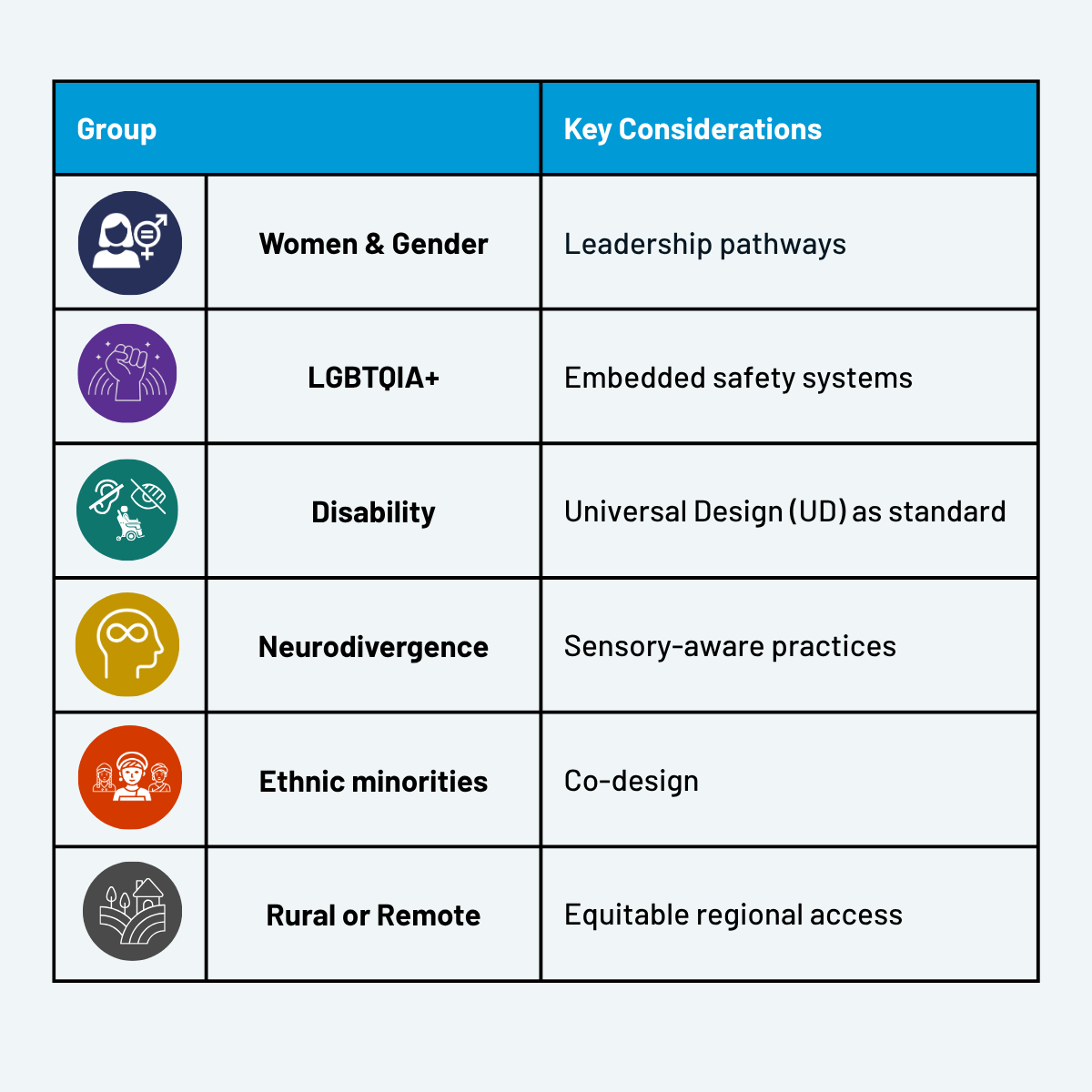
Inclusion Maturity, Systems Change, and Organizational Capability
Resources for deeper context & maturity reflection points
Key Points
Maturity reflection points, and Signals of Maturity
Practical Considerations
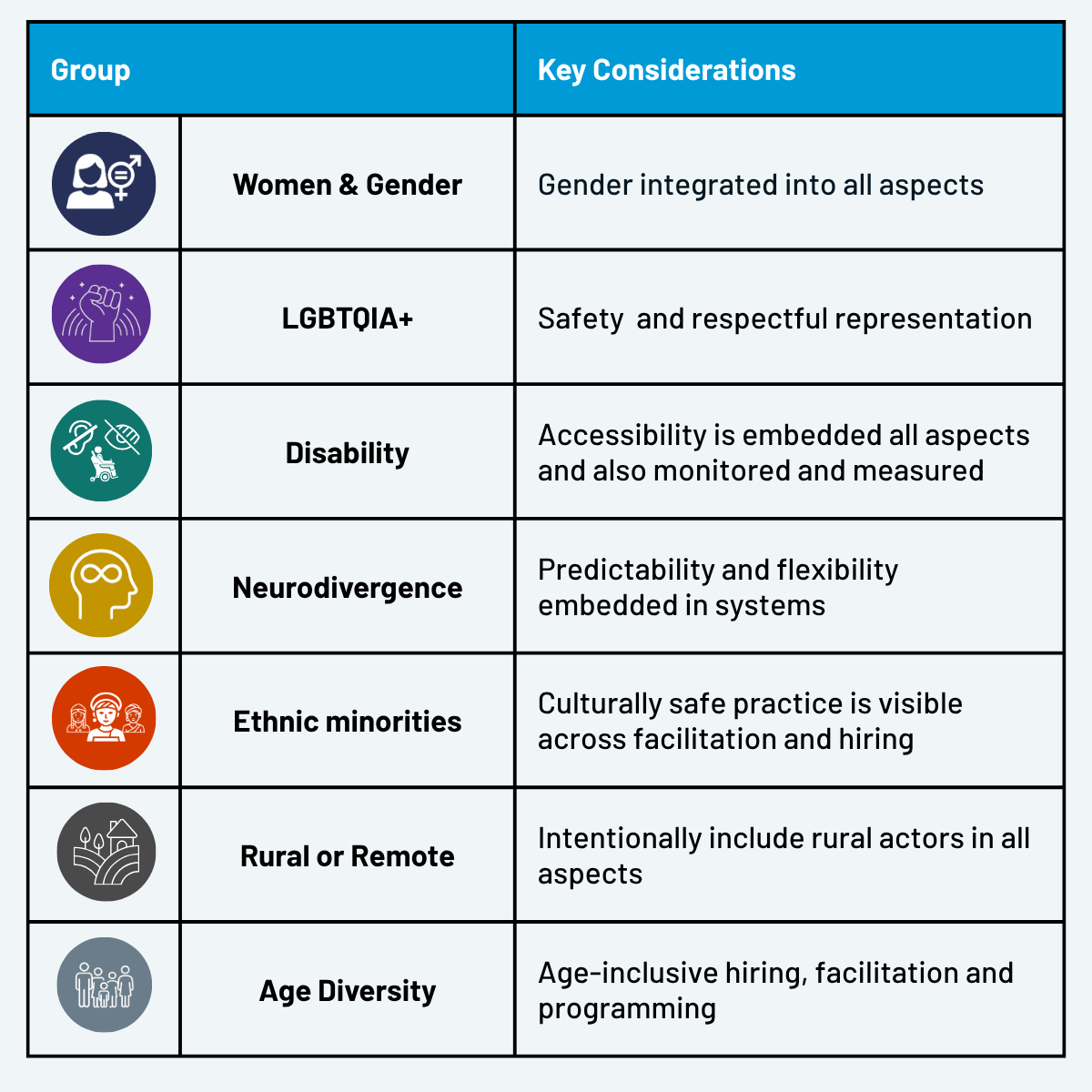
Policy Foundations
Core Policies
Policies enabling safe, accessible, equitable practice
Key Points
Inclusion & non-discrimination, Code of conduct, Safeguarding, and Accessibility commitments
Practical Considerations
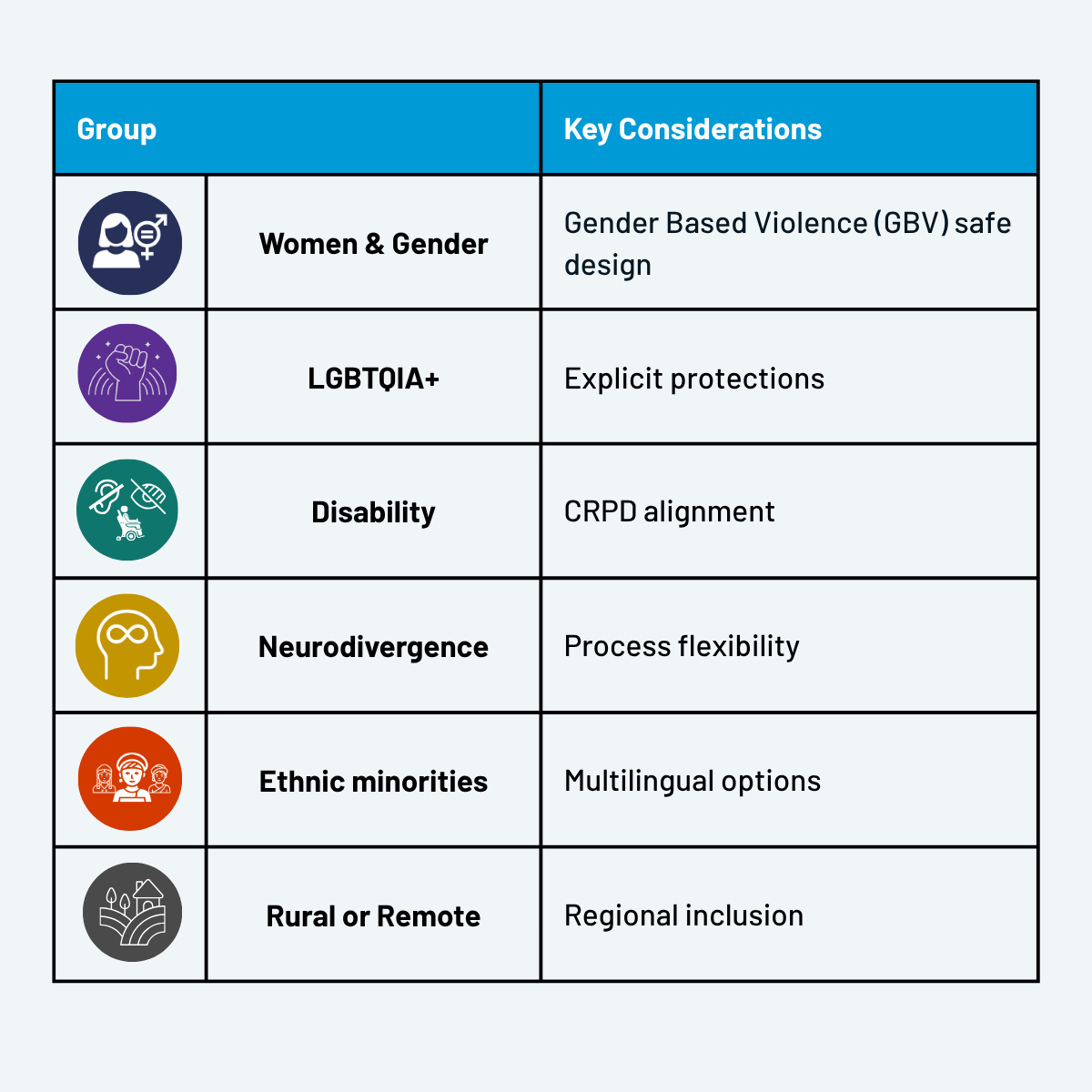
Sample Policy Templates
Essential components of a simple policy
Key Points
Purpose, Scope, Key definitions, and How to implement
Operationalizing Inclusion
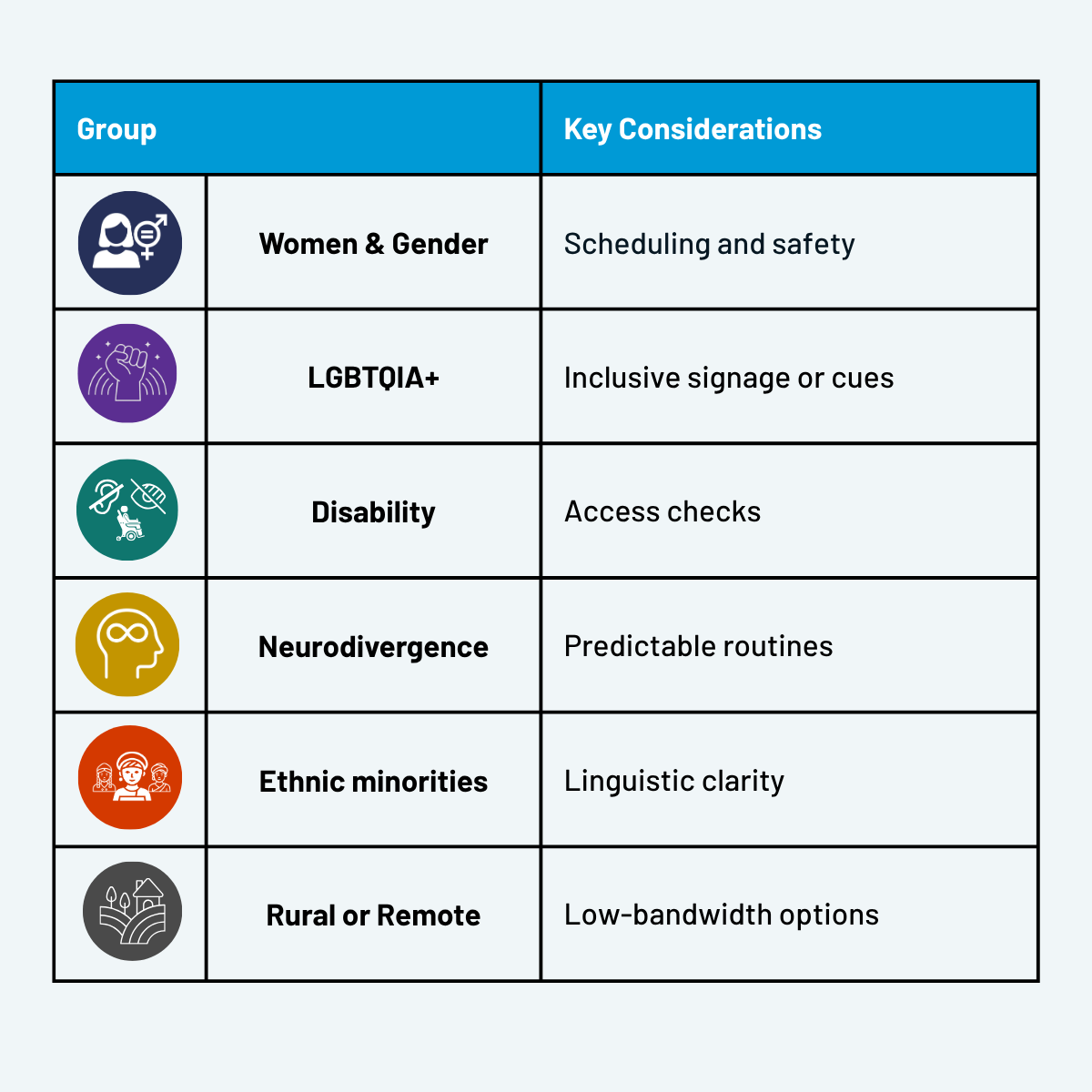
Daily Operations
Translating inclusion commitments into routines
Key Points
Accessible meetings, Inclusive workflows, Accountability for follow-through, and Clear responsibilities
Practical Considerations
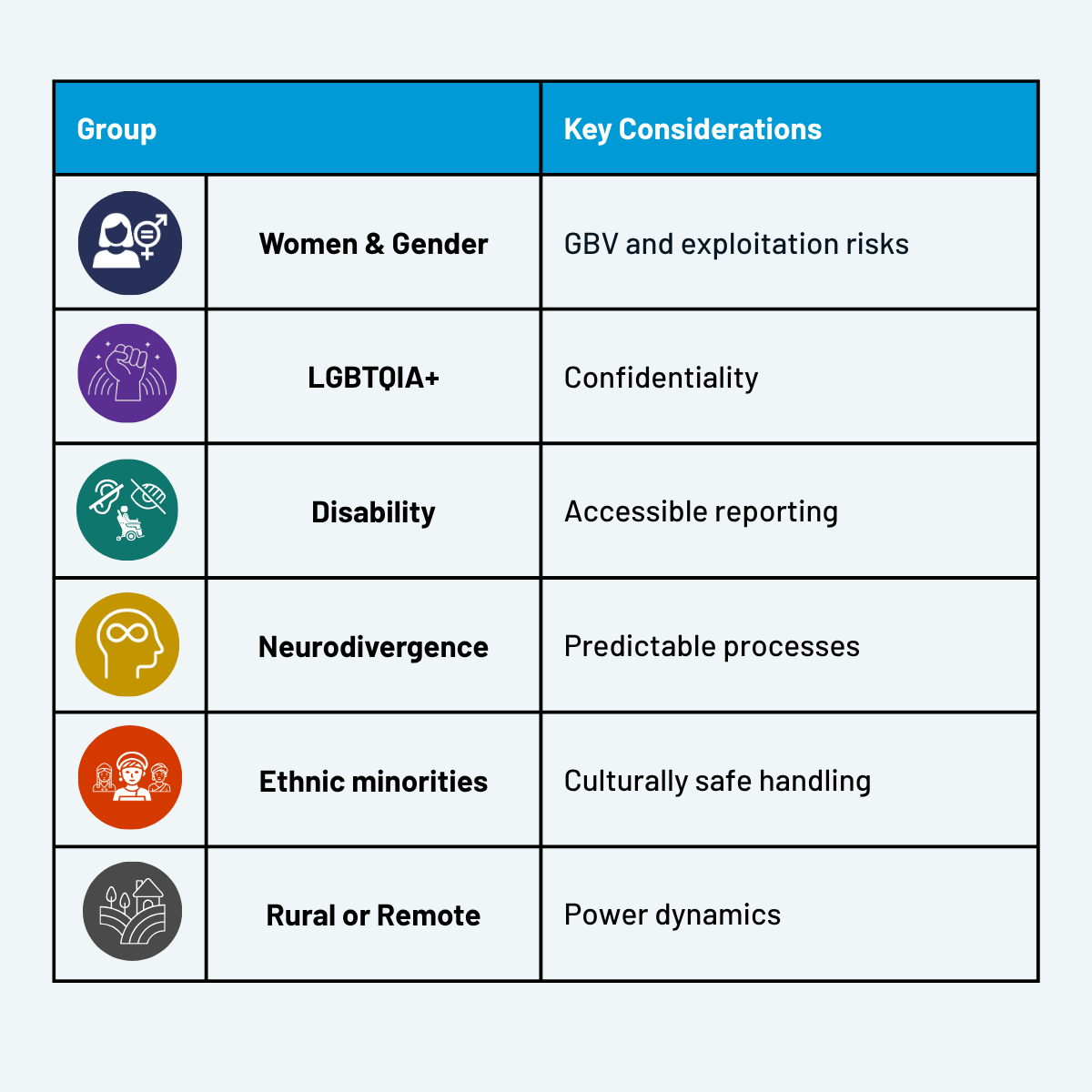
Safeguarding
Safe environments for all participants
Key Points
Survivor-centered approach, Clear reporting pathways, Trauma-informed responses, and Defined roles and responsibilities
Practical Considerations
Inclusive HR Systems
Recruitment, onboarding, performance, culture, and safety
Key Points
Bias-aware recruitment, Accessible onboarding, Inclusive performance management, and Psychological safety
Practical Considerations
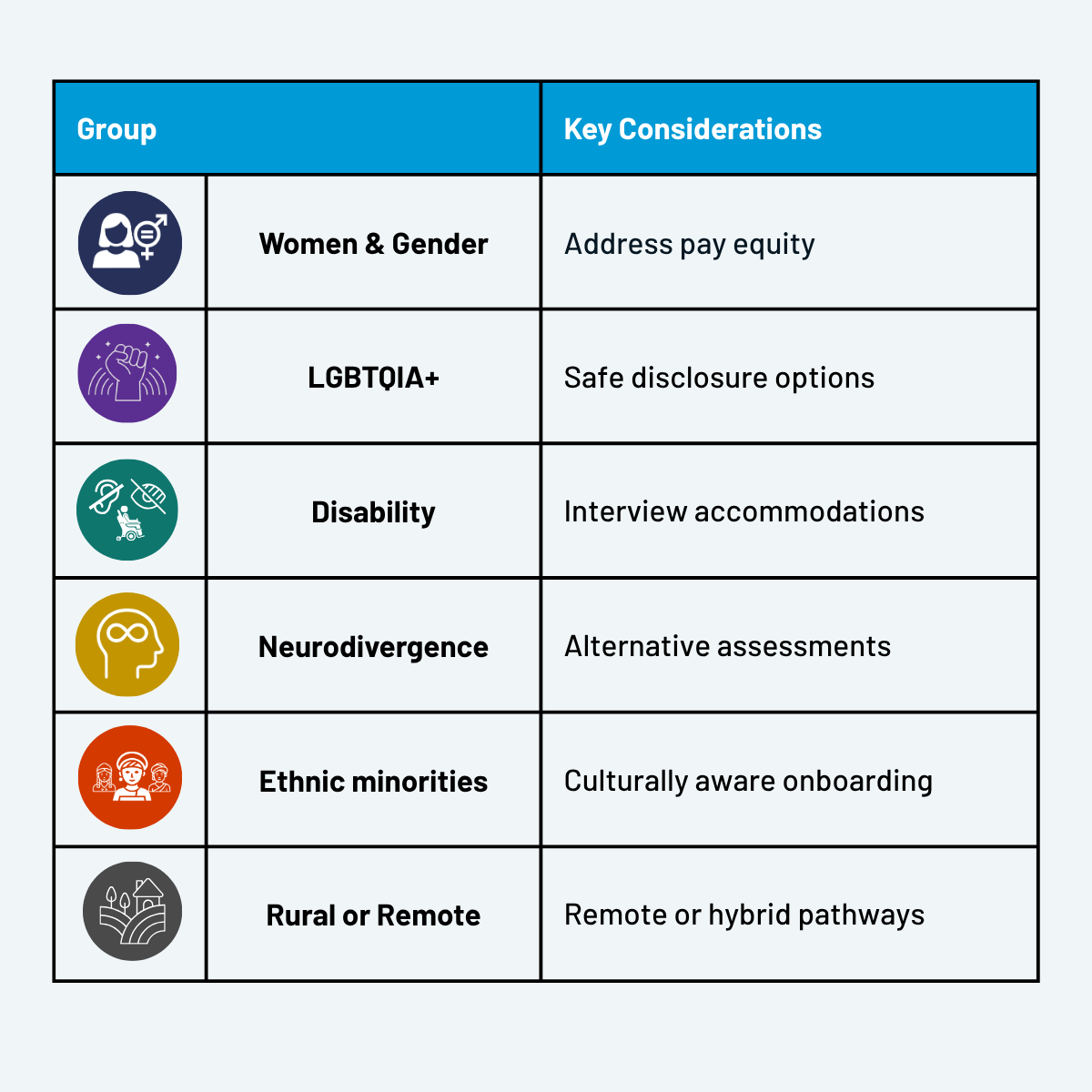
Inclusive Program & Service Delivery
Inclusive Programming
Designing equitable, safe and responsive programs
Key Points
Participation pathways, Barrier assessments, Inclusive facilitation, and Adaptive design
Practical Considerations
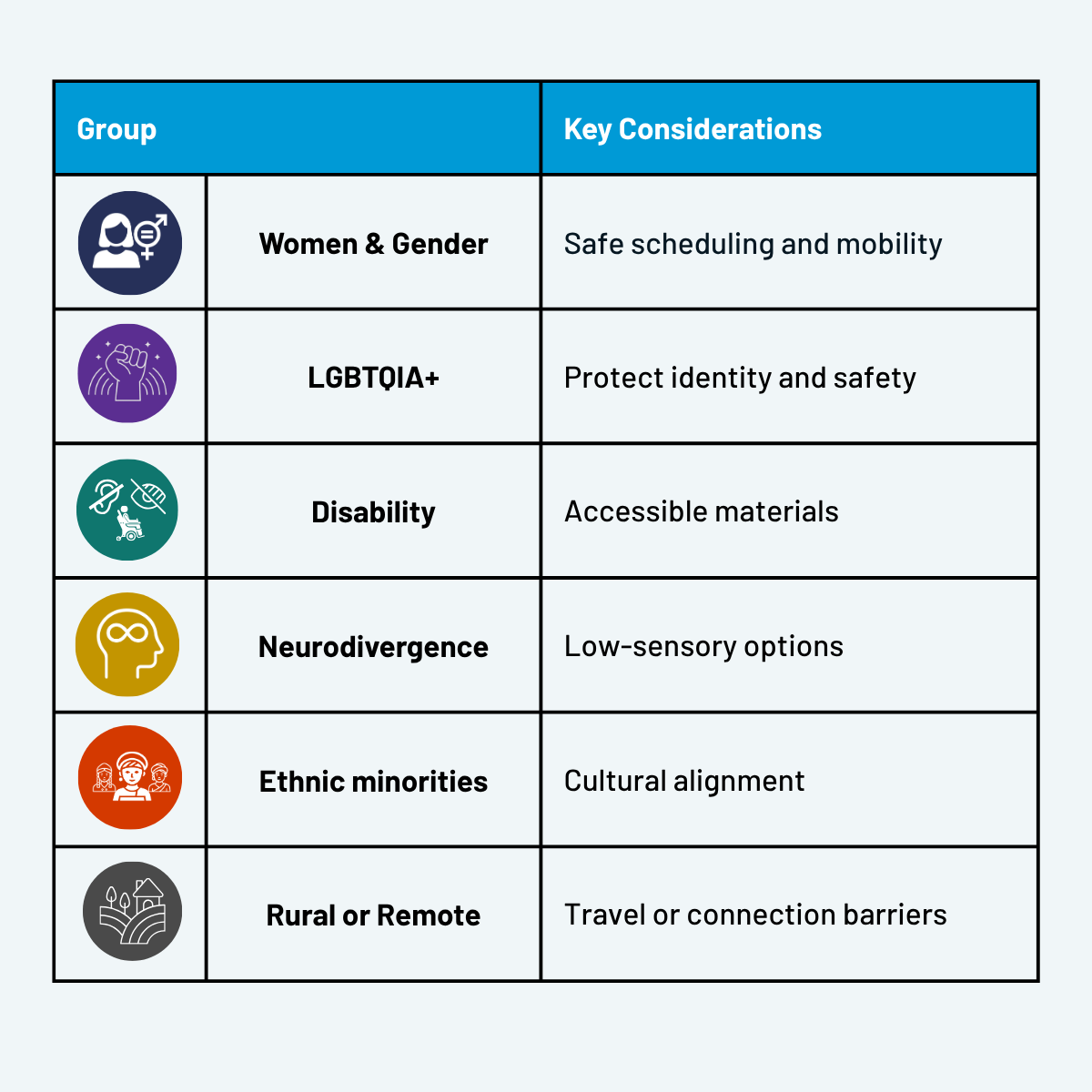
Barrier Identification
Barrier Identification for removing structural barriers in programs
Key Points
Pre-program barrier mapping, Access reviews, Fair participation pathways, and Adaptive design
Practical Considerations
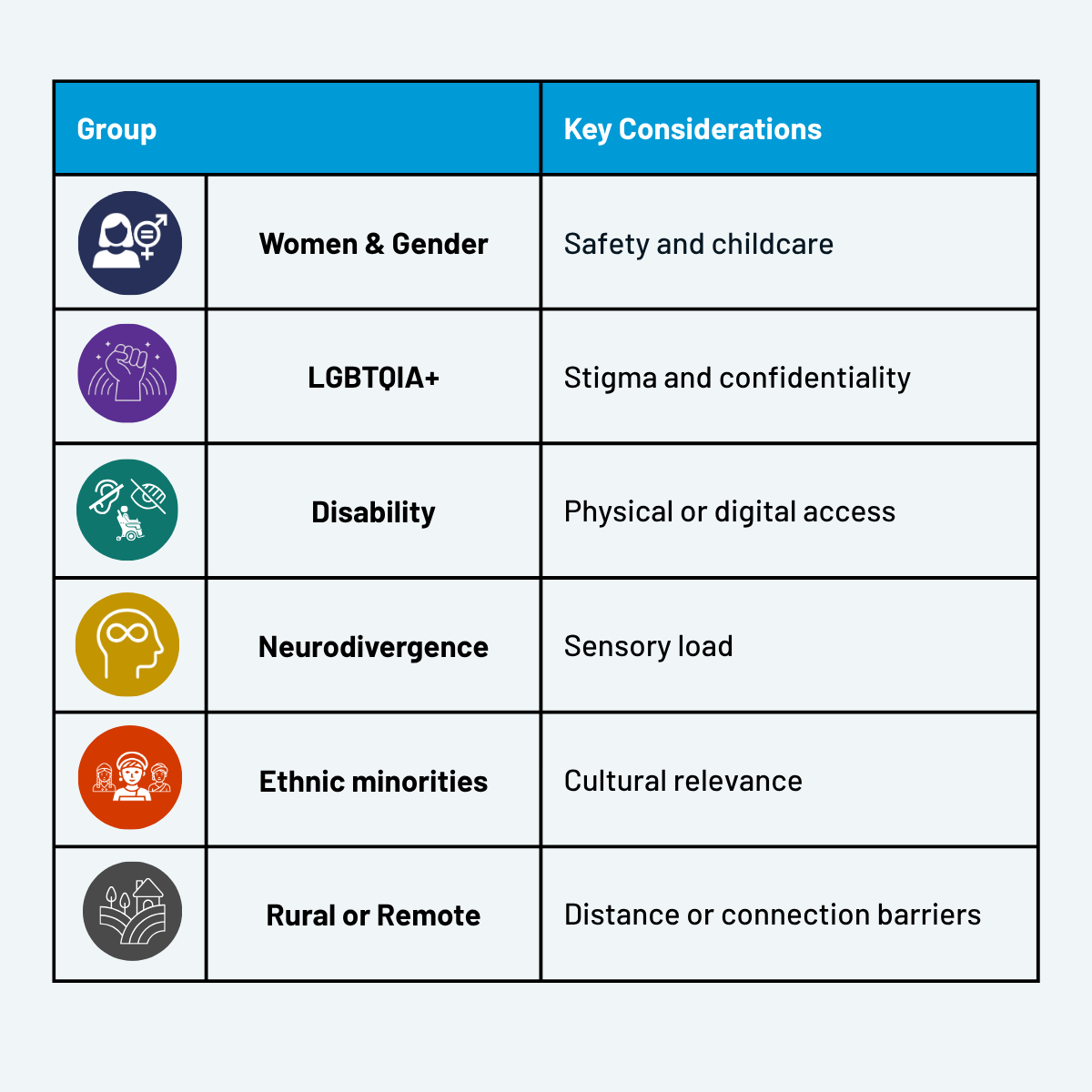
Trauma-Informed Practice
Safe and grounded facilitation
Key Points
Predictable structure, Consent and choice, Emotionally safe facilitation, and Referral pathways
Practical Considerations
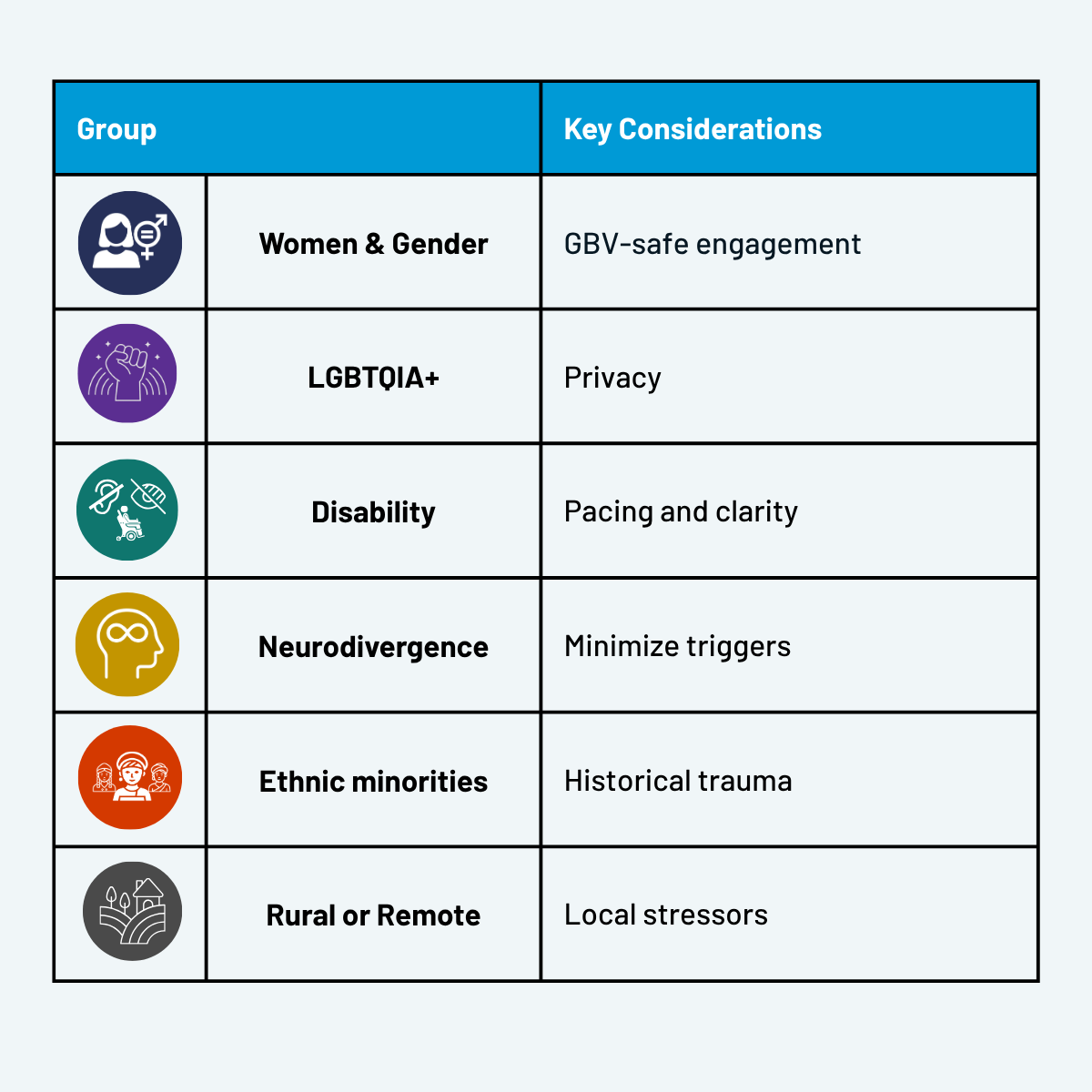
Co-design with participants
Program shaping with communities
Key Points
Collaborative design, Iterative feedback, Fair compensation, and Inclusive facilitation
Practical Considerations
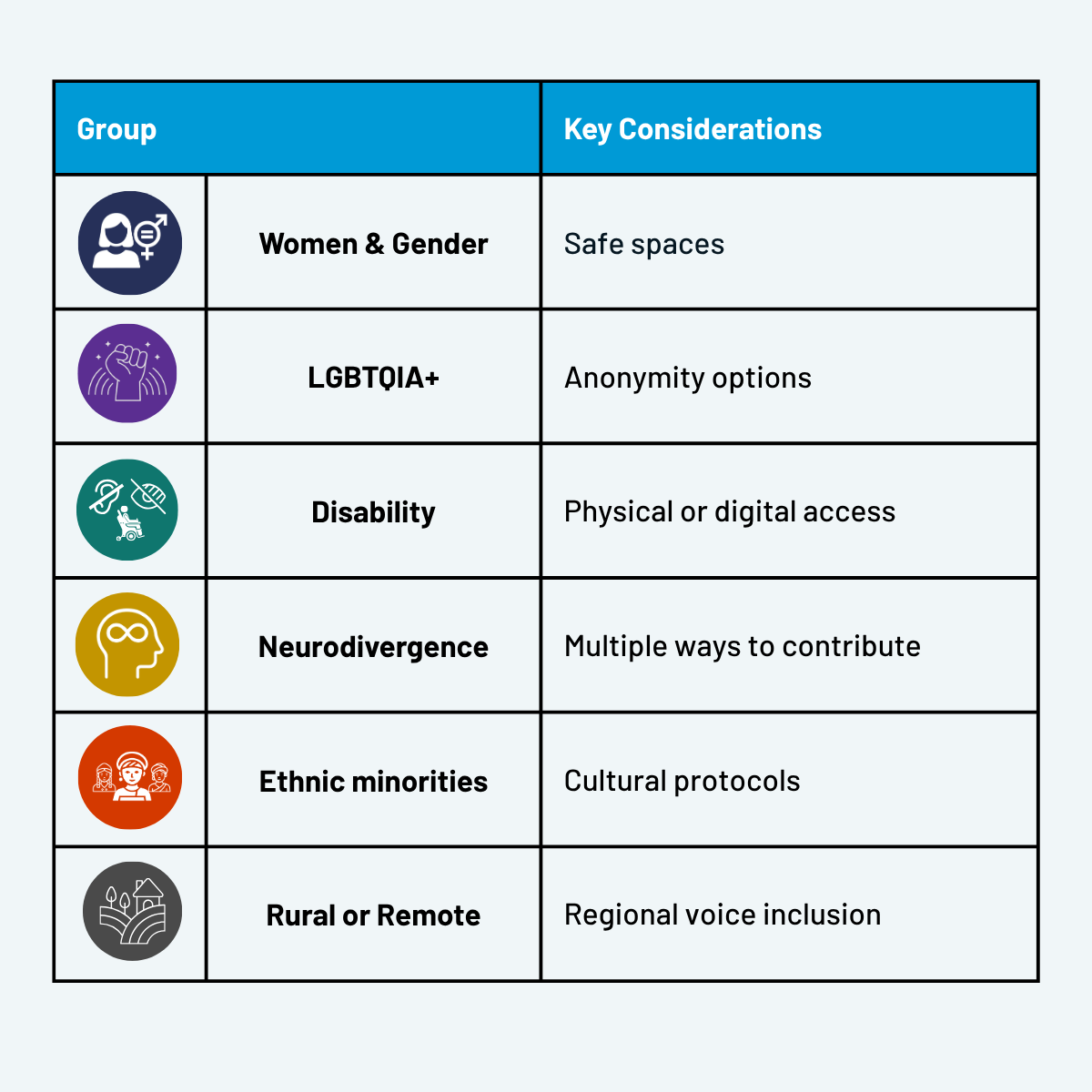
HR, People & Culture
Inclusive recruitment & onboarding, Inclusive performance management, and Team culture & psychological safety
Holistic HR approaches that support psychological safety, reduce bias, and create accessible and culturally safe pathways for staff to join, work, and progress.
Key Points
Inclusive recruitment and selection practices, Bias-aware interviewing, shortlisting, and promotion pathways, Culturally safe and respectful feedback and communication norms, Inclusive onboarding and orientation for new staff, Accessible and flexible performance management approaches, Psychological safety and staff wellbeing, Reasonable accommodation processes (clear, confidential, and normalized), Team culture that supports diversity, flexibility, and respectful communication, and Professional development and progression opportunities
Practical Considerations
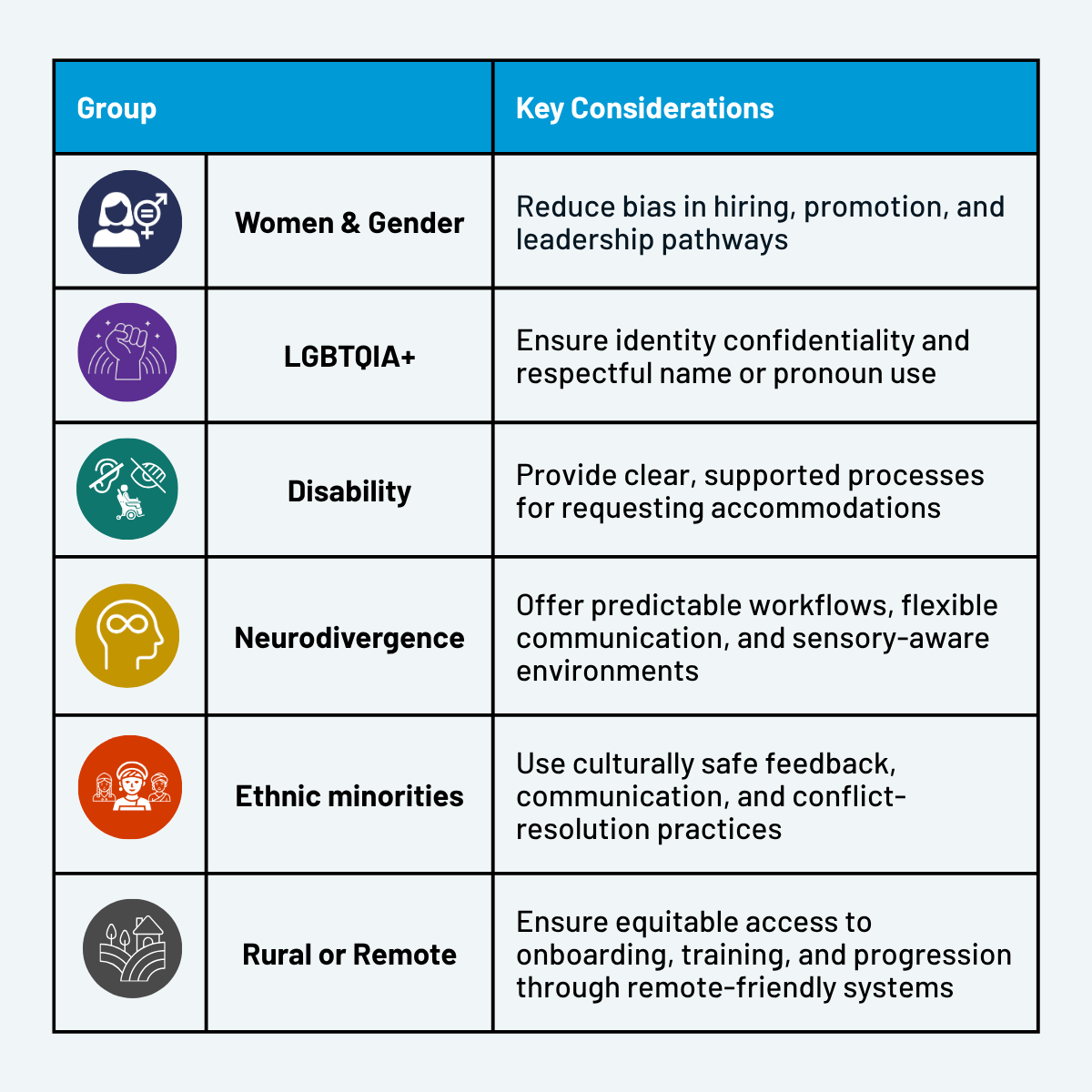
Inclusive Communications
Accessible Messaging
Respectful, accurate, and accessible communication
Key Points
Plain language, Multiple formats, Accessible structure, and Representation reviews
Practical Considerations
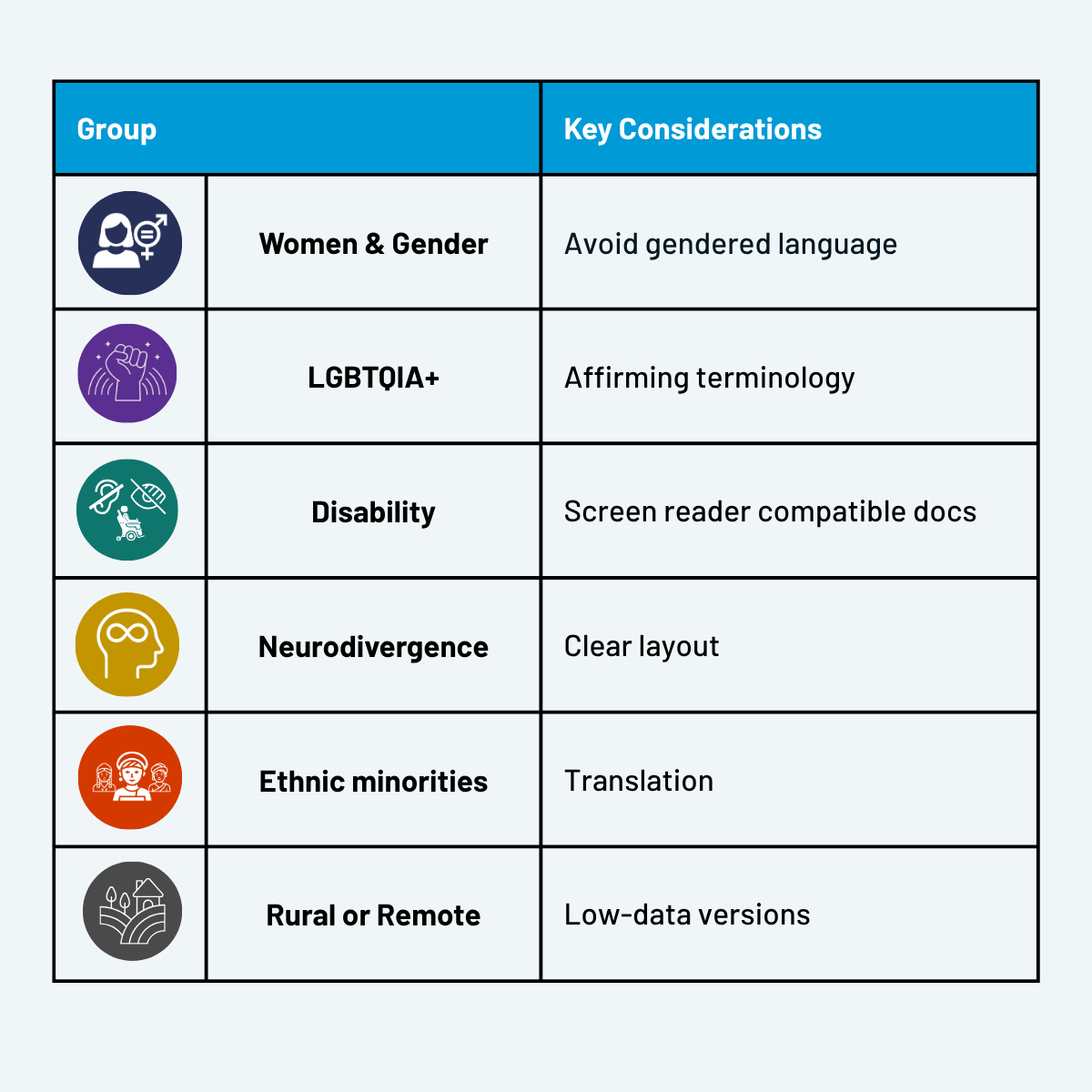
Representation
Accurate and respectful portrayal
Key Points
Balanced imagery, Non-tokenistic content, Authentic stories, and Intersectional representation
Practical Considerations
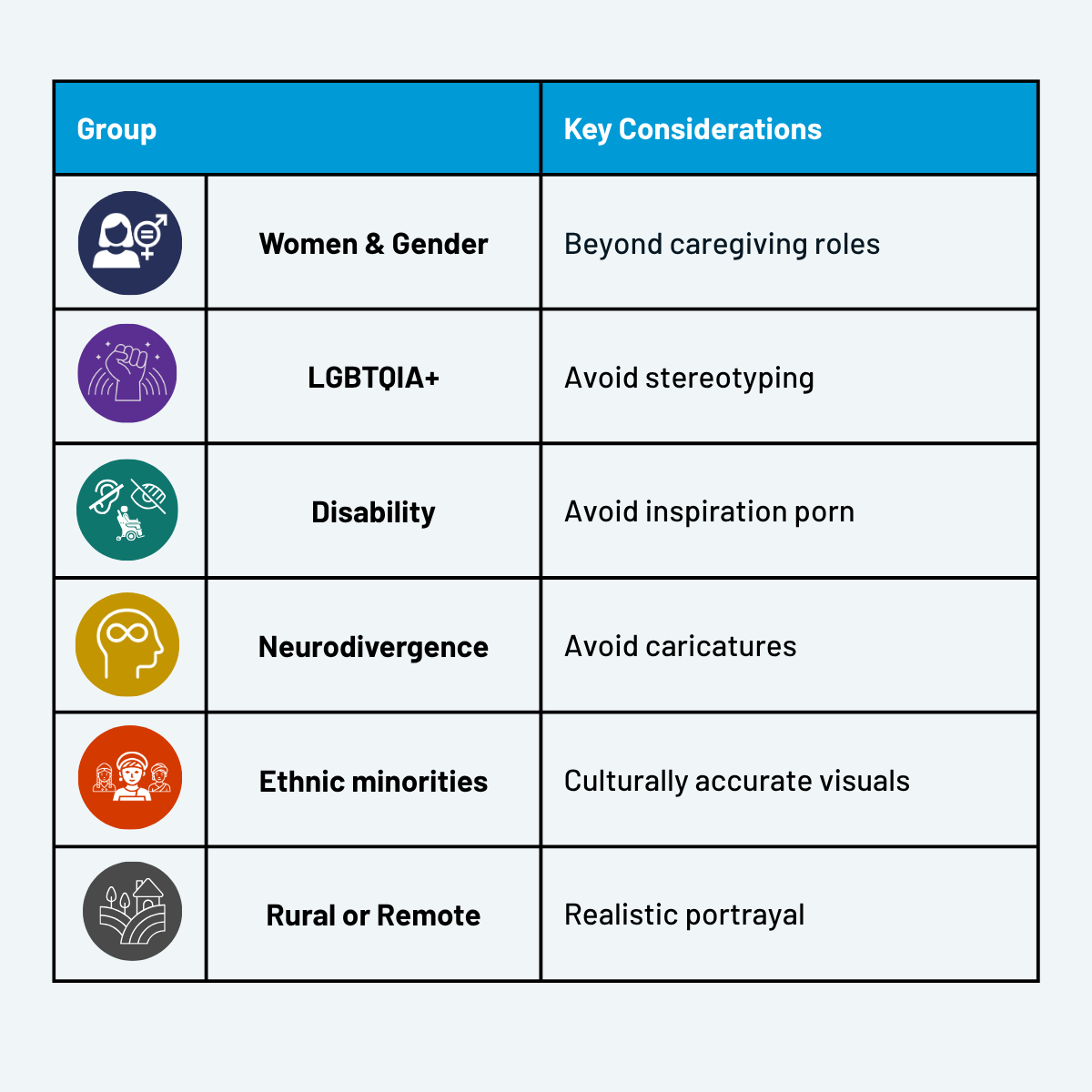
Social Media Practices
Accessible, Mindful, Responsive
Key Points
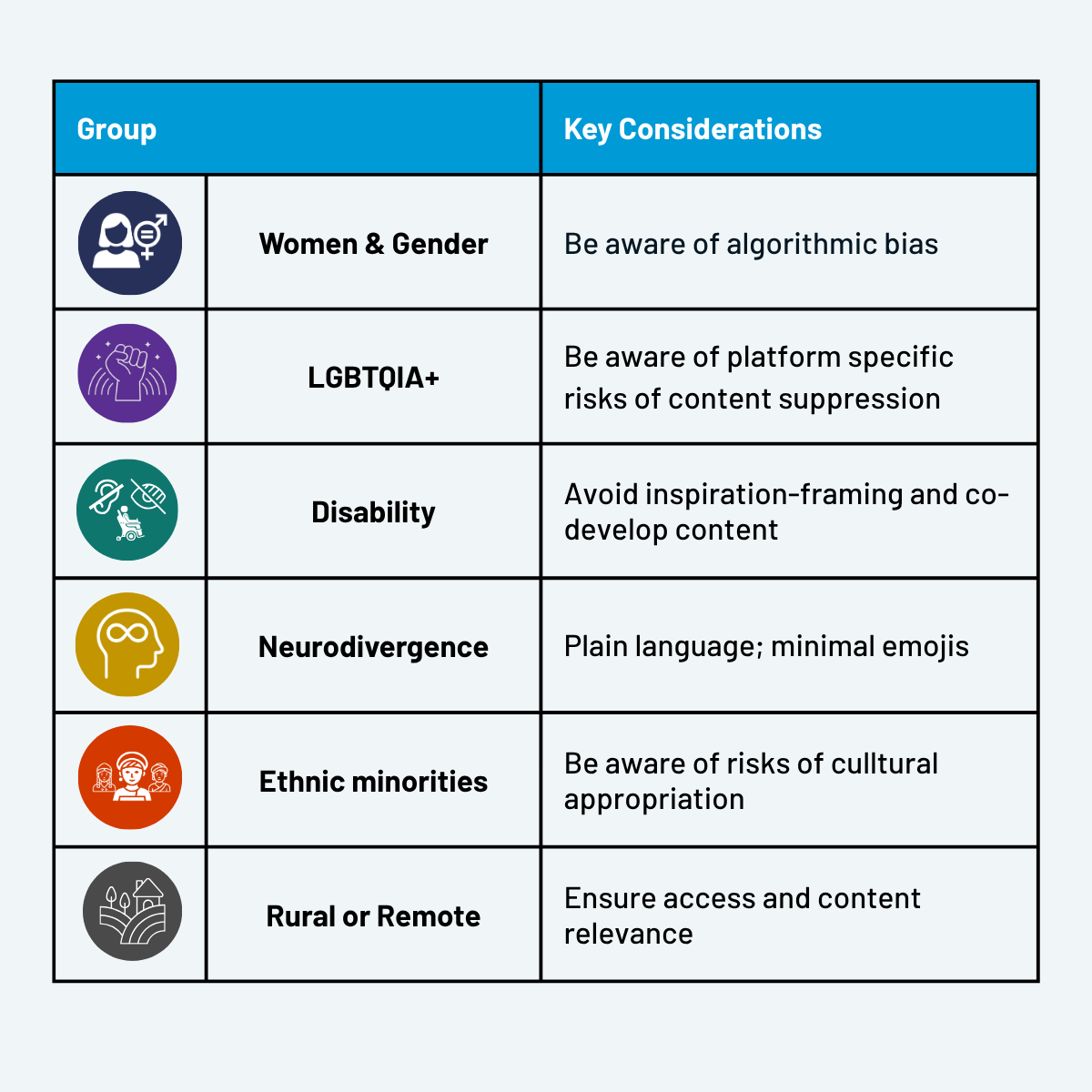
Accessibility of social media content, Platform specific considerations, Handling comments, Inclusive social media metrics and evaluation, and Community engagement and co-creation
Practical Considerations
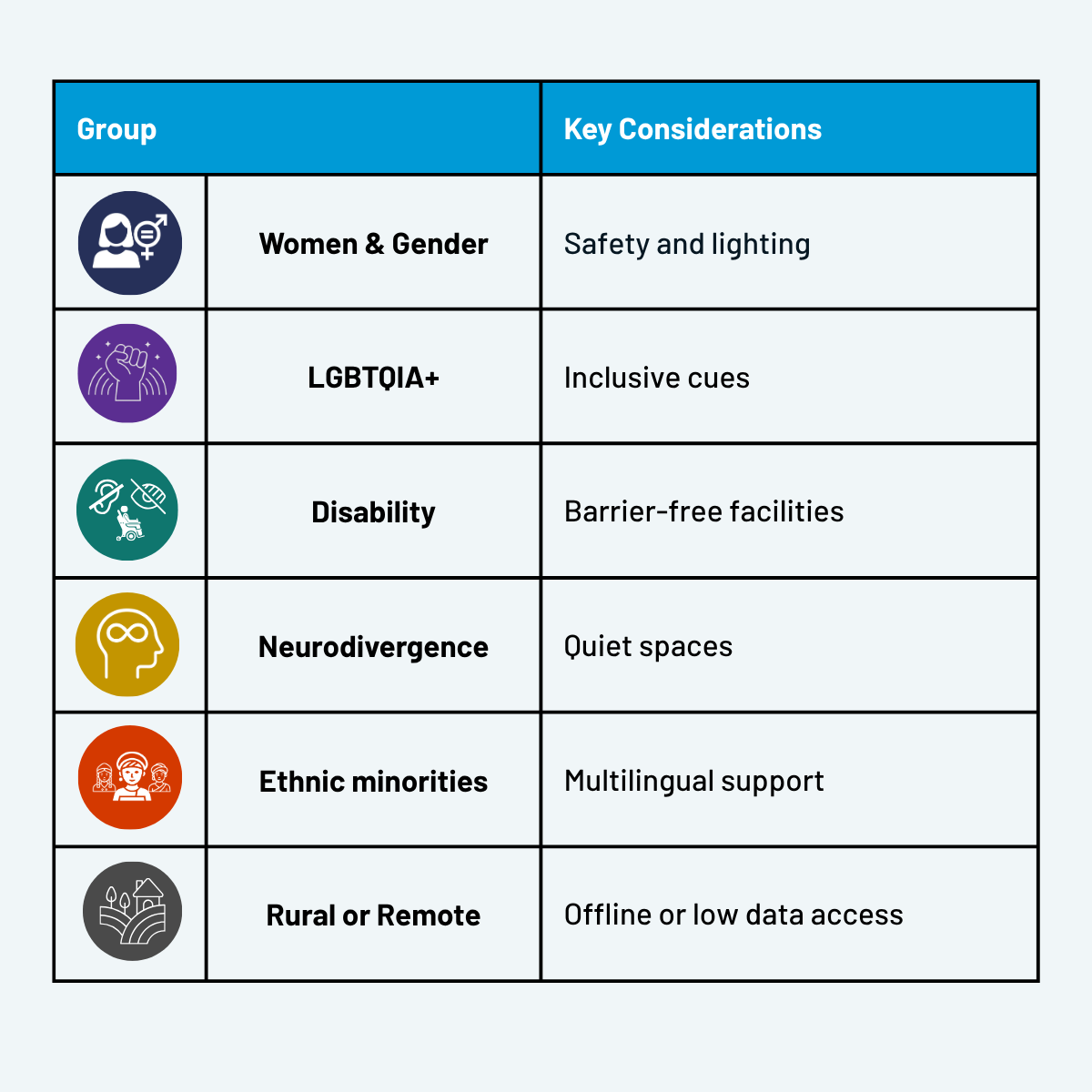
Accessibility & Reasonable Accommodation
Types of reasonable accommodations
Right to access and individual adjustments
Key Points
Access budgeting, Accommodation pathways, Physical or digital design, and Response timelines
Practical Considerations
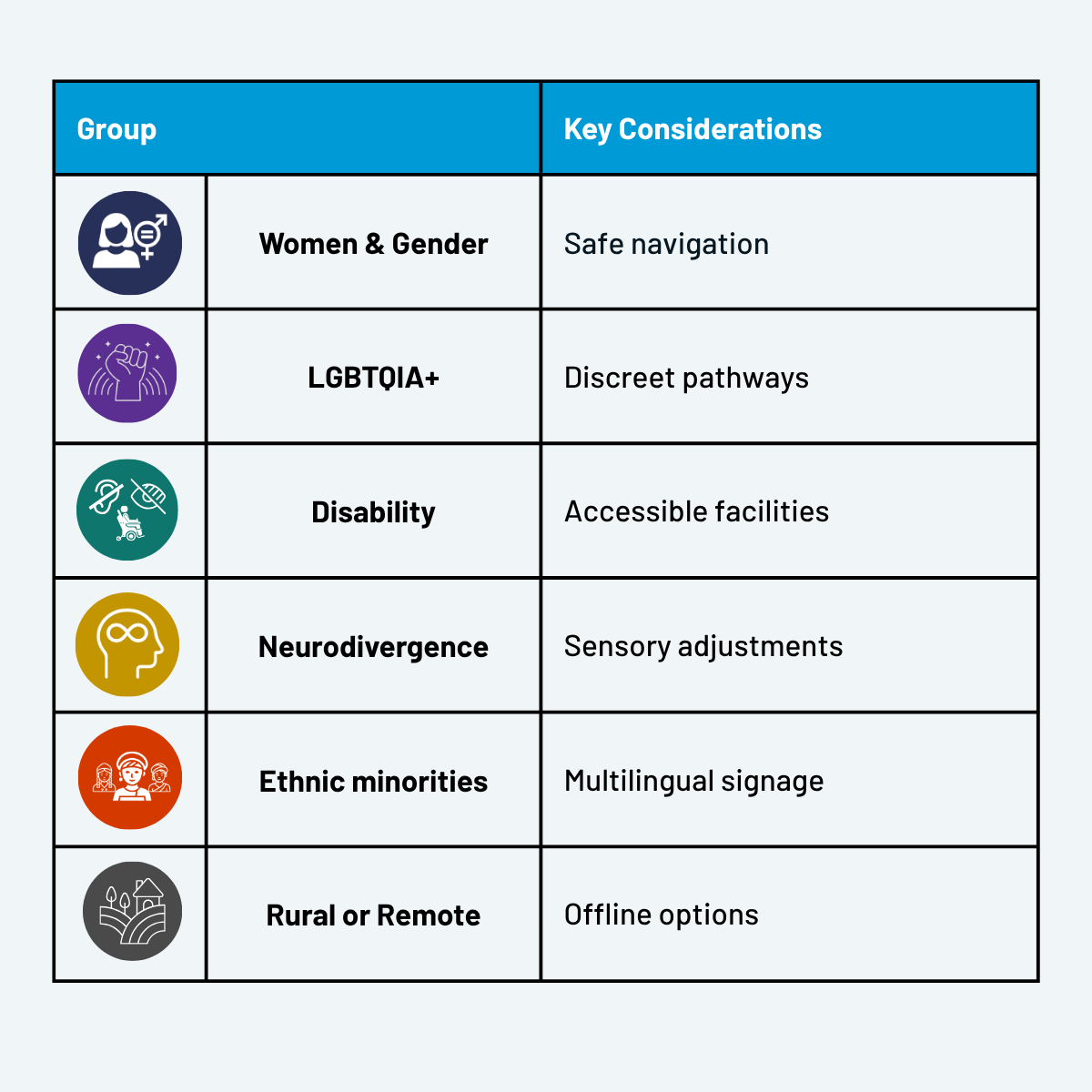
Accessibility
Design for independent participation
Key Points
Accessible venues, WCAG digital standards, Clear signage, and Assistive technology compatibility
Practical Considerations
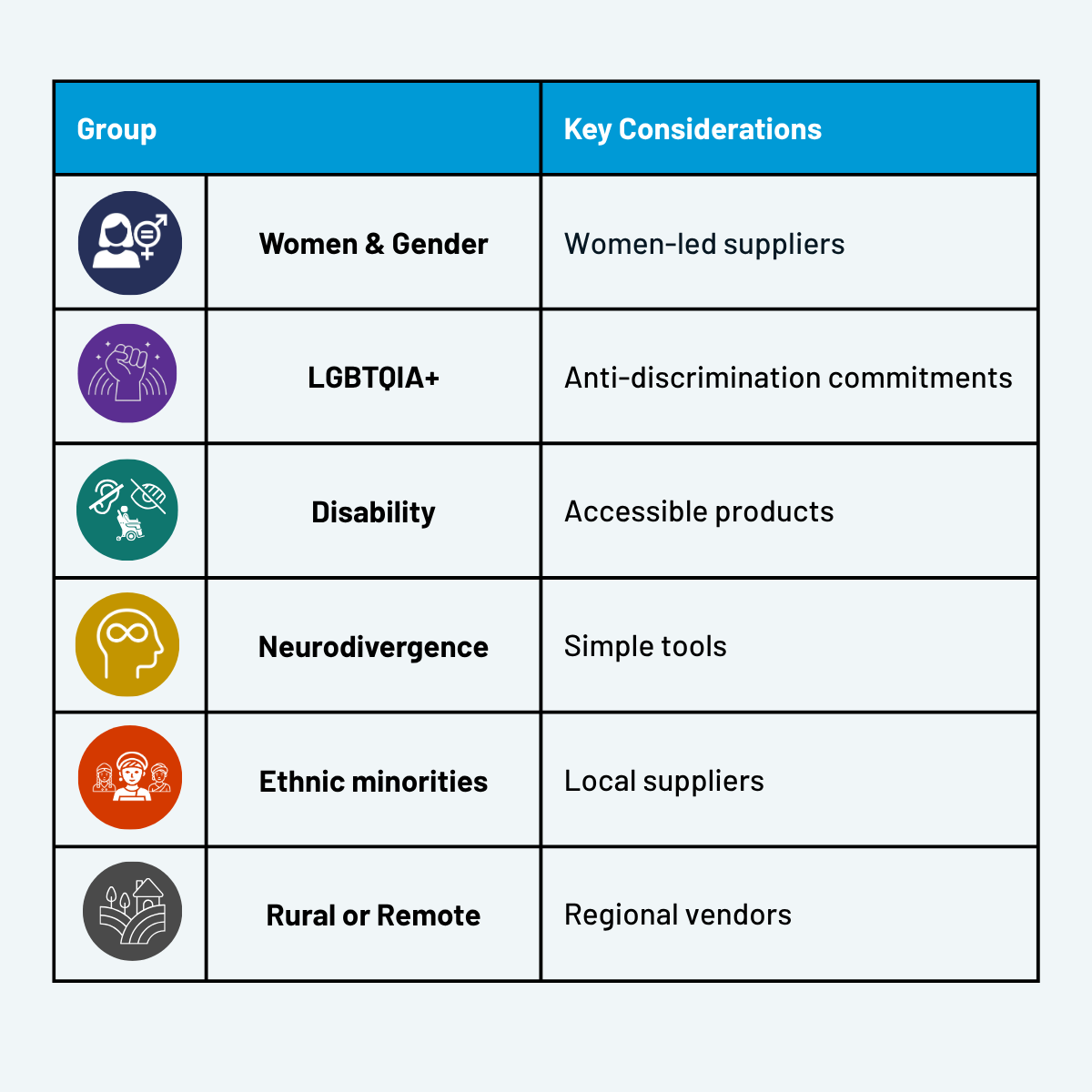
Inclusive Procurement
Supplier Inclusion criteria, Diversified vendor pool, Supplier due diligence, Opportunities for disability-led or women-led enterprises
Inclusion through supply chains
Key Points
Inclusive supplier criteria, Expand sourcing channels, Fair evaluation & selection, Supply chain transparency, Prompt payment policies, and Monitor inclusion outcomes
Practical Considerations
Monitoring, Learning & Data
Ethical and Safe Data Collection, Disaggregated Data, Learning & Adaptation, and Risk Mitigation & Consent
Data with safe and ethical data practices
Key Points
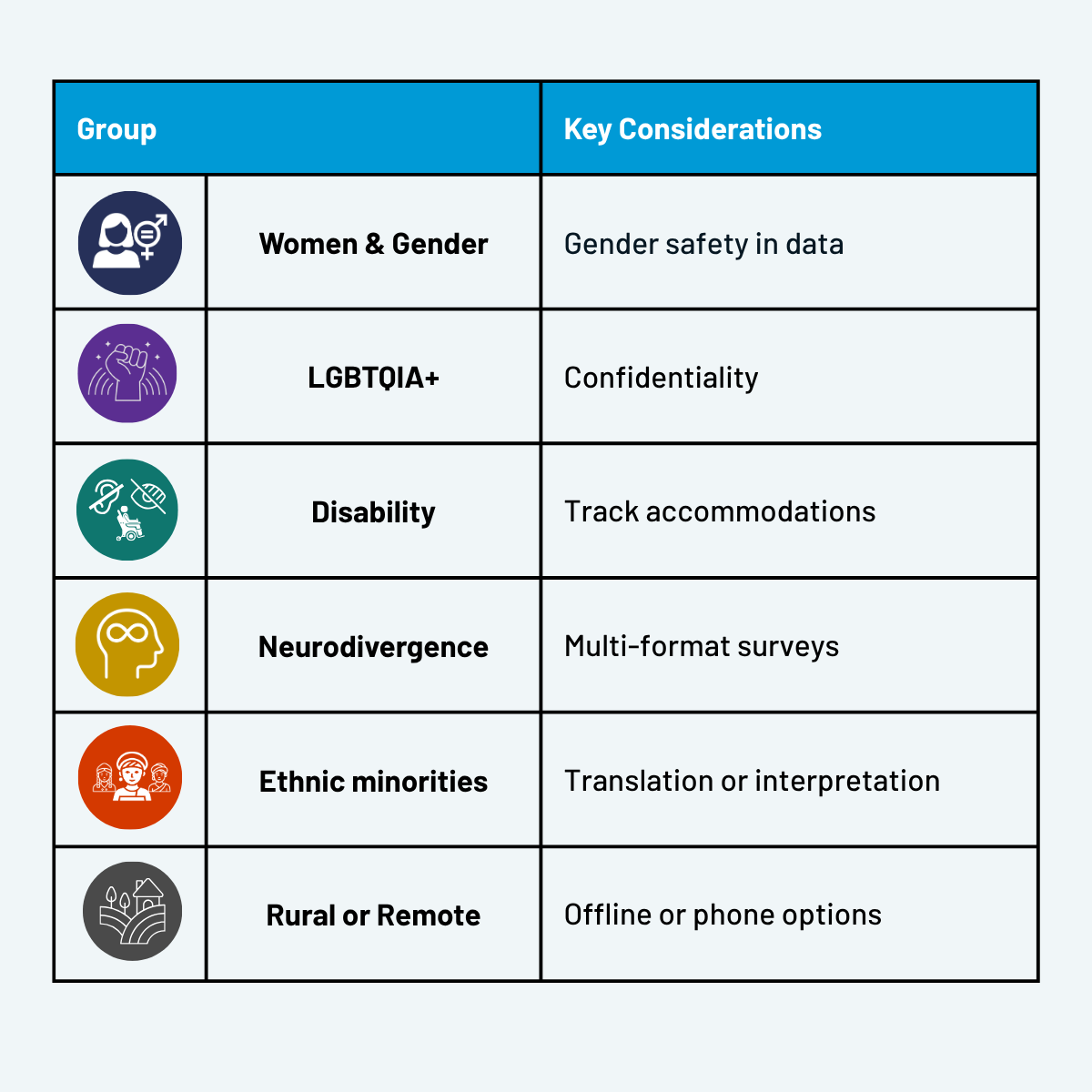
Collect only necessary data, Disaggregate respectfully, Ensure consent or confidentiality, and Use data to close equity gaps
Practical Considerations
Strong policy foundations ensure that inclusion is applied consistently across the organization rather than left to individual interpretation. For more policy templates ranging from beginner to mid to deep dive, please check out!