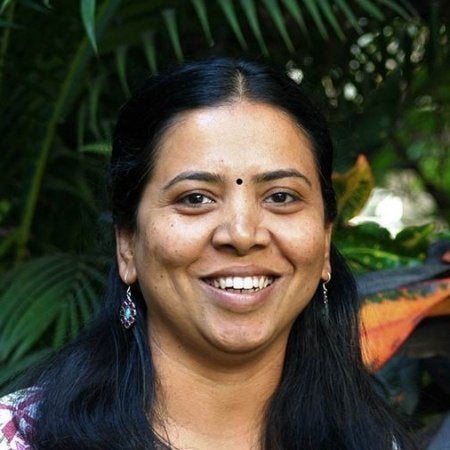
In this edition, ANDE South Asia features an interview with Shobha Venkataraman, who brings over 15 years of experience in private equity fund administration and serves as a Board Member of EPIC World Foundation.
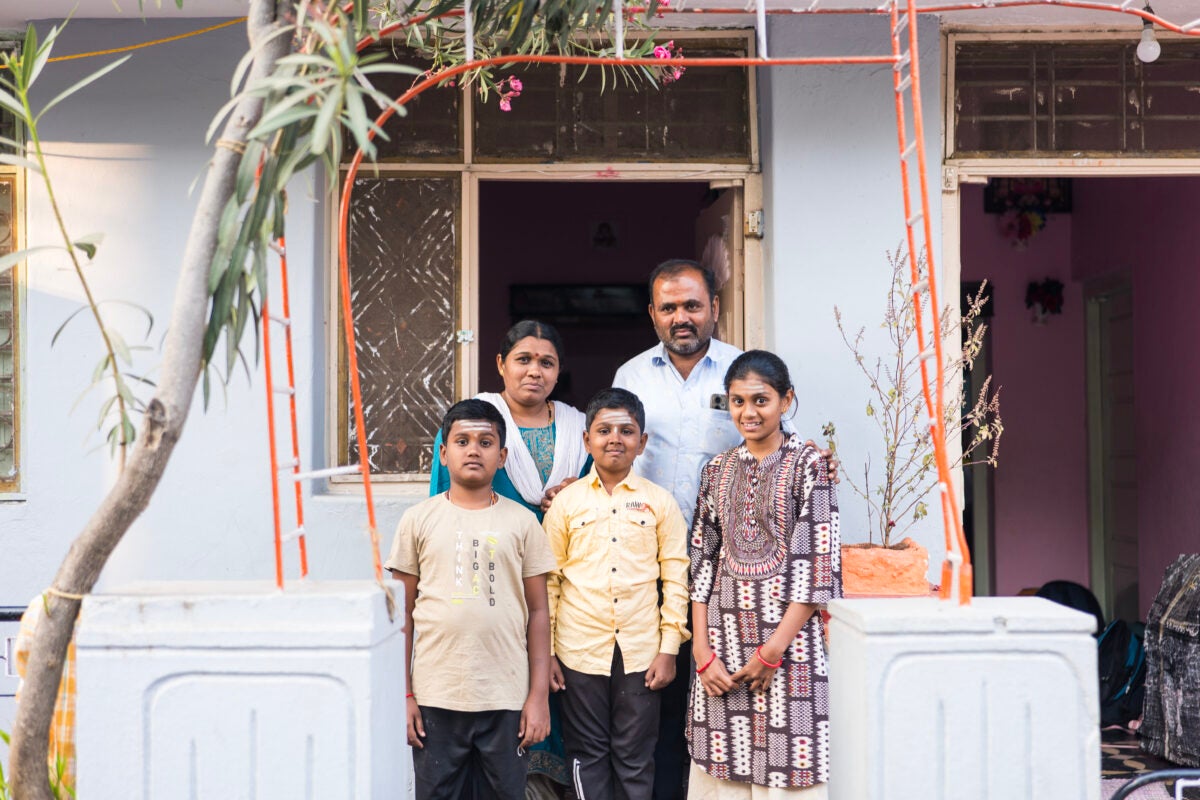
Shobha is drawing attention to a segment of India’s economy that often falls between familiar categories. Public debate tends to focus on high-growth tech firms and urban middle class or households living in poverty. Between those poles sits a large group of families with multiple income sources, rising aspirations, and significant economic activity: Entrepreneurial Households.
This segment—full of energy and potential—is ready to be better served by policymakers, financial institutions, and the investment community. EPIC World estimates there are nearly 250 million Entrepreneurial Households in India, representing roughly 1 billion people. For ANDE members working to support small and growing businesses (SGBs), understanding who they are — and who they are not — matters.
While the last decade successfully solved the access challenge through robust digital infrastructure and policy initiatives, that was merely the foundation; moving from access to meaningful adoption now requires acknowledging the unique ambitions and resilience of these entrepreneurial households. This is not a demographic in need of “help.” It is a high velocity, transaction-intensive market that is ready to be served by systems designed for its specific complexity.
What defines an Entrepreneurial Household?
Shobha Venkataraman: EPIC World identifies four defining characteristics.
First, these households rely on strategically diversified income streams. A family may combine farm income, a retail enterprise, salaried work, seasonal labor, remittances, or rent. In EPIC World’s EH360 study — which surveyed 5,220 households across 18 states and 135 districts — families with three or more income streams could withstand economic shocks for nearly eight months, compared with roughly 4.7 months for single-income households. Diversification is not incidental; it is a resilience strategy.
Second, they have moved beyond subsistence. In the Indian context, one marker is ownership of a pucca house — a permanent structure built with durable materials such as brick, stone, or concrete, as opposed to a kutcha dwelling made from mud, thatch, or bamboo. That level of asset stability signals a stronger ability to plan, invest, and manage risk.
Third, these households are aspirational and discerning. The EH360 study found that 67 percent identified children’s education as their top funding priority. Earlier EPIC World research also found strong willingness to pay more for better education (74 percent) and health care (78 percent). These households are not passive recipients of services; they are active consumers making deliberate choices about their futures.
Fourth, the household operates as one economic unit. Income often comes from several family members, sometimes across sectors and geographies. One person may send remittances home, another may run a local enterprise, and another may hold formal employment. The household functions as what EPIC World describes as a “mini-conglomerate”, managing a complex web of inflows and outflows, formal and informal, across locations and sectors.
Why this matters for the SGB ecosystem
Shobha Venkataraman: For practitioners, investors, and entrepreneurship support organizations, this framing has practical implications. EPIC World reports that 95 percent of Entrepreneurial Households have a bank account, 97 percent own a smartphone, and 74 percent use UPI, India’s digital payments system. Yet formal financial engagement remains limited: just 2 percent used a digital lending app.
That gap suggests the issue is not simply access. It is fit. Traditional financial products are often built for a simplicity – formal employment, standardized documentation, single clear revenue source – that does not exist in the real economy. Entrepreneurial Households operate differently. They earn, save, spend, and borrow across multiple channels, often as a family unit rather than as a single entrepreneur.
EPIC World argues that this segment should be understood through its total economic activity, not through conventional income measures alone. Its Core Transaction Value (CTV) framework seeks to capture the full picture of household inflows, outflows, borrowing, and spending. By that measure, the segment represents an estimated $8.8 trillion in CTV. For ANDE members, that reframing shifts the conversation from deficits toward capability, resilience, and opportunity.
A segment worth seeing clearly
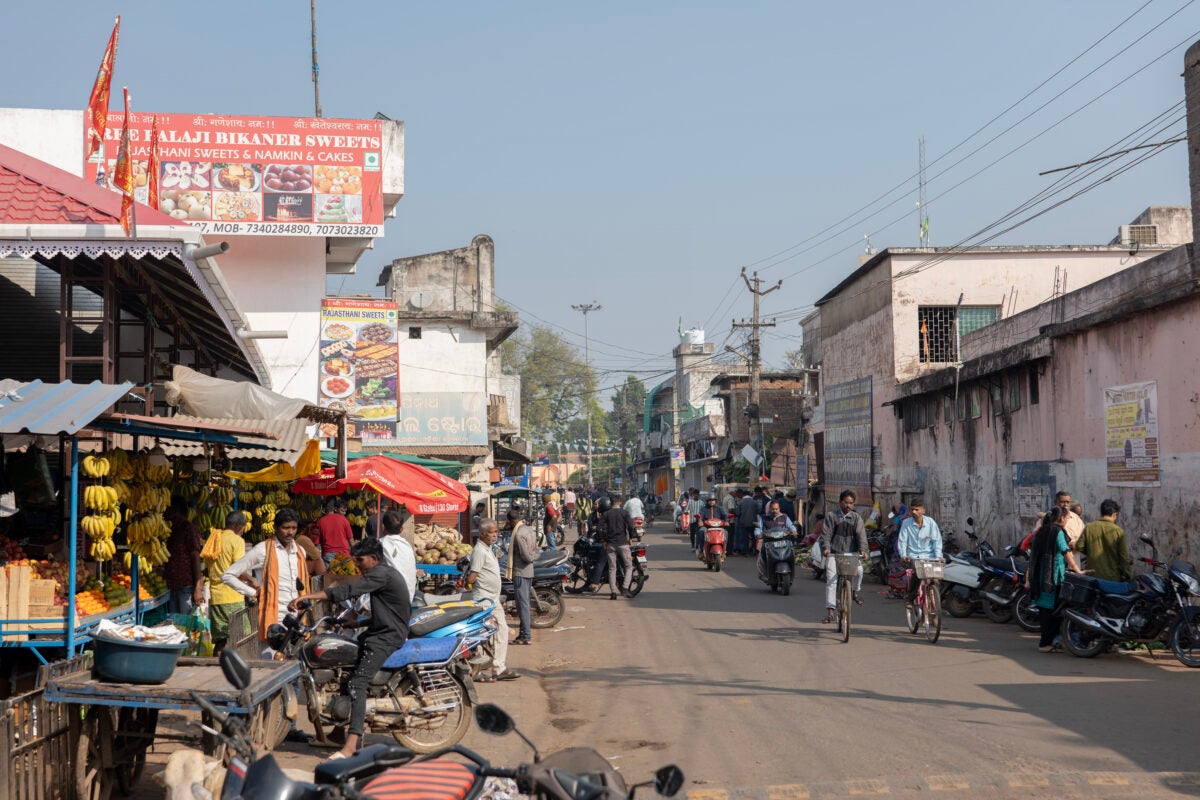
Shobha Venkataraman: EPIC World’s research offers a timely reminder: a major share of India’s economy is driven by a quarter of a billion households that are strategic, ambitious, and still poorly served by existing systems. For the SGB sector, recognizing that reality is not just a matter of better classification; it is a step toward designing better products and solutions, smarter capital pathways, and more relevant services.
The question is not whether this segment is ready, but whether institutions are ready to serve it.