
South Asia’s climate innovation scene is growing fast. It is not built on hype, trends, or technology in the abstract. Rather, it is being built by entrepreneurs testing ideas in difficult markets, by entrepreneurship support organizations trying to connect fragmented players, and by local ecosystems learning how to move capital and knowledge where they are most needed.
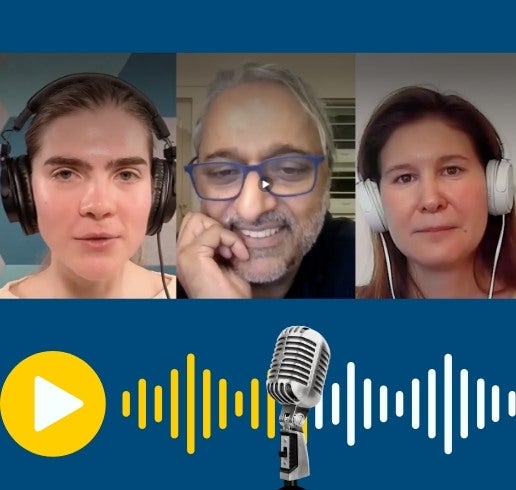
That is the backdrop of ANDE and WWF Impact’s latest Catalyzing Climate Conversations episode, featuring Pratap Raju, Founding Partner of Climate Collective.
Raju’s own path into climate work is anything but conventional. Before founding Climate Collective in 2016, he wore a variety of different hats, including leading a variety of different ventures, an IT company, directing Bollywood films in Mumbai, and later launching a solar business during India’s early solar boom. Some of those ventures failed. One went bankrupt. But it is that lived experience, he suggests, that shaped not only his understanding of entrepreneurship, but also his decision to build an organization focused on helping other founders working in climate.
Practical view of ecosystem building
What emerges in the episode is a practical view of ecosystem building. South Asia, and India in particular, did not have a lack talent or ambition. What it needed was more visible proof-points around how climate entrepreneurship could work : examples, networks, convening spaces, and organizations able to help early-stage founders move from promising ideas to viable companies.
That need for practical infrastructure runs through the conversation. So does the question of AI. Raju points to real applications already taking hold in sectors such as power and disaster response, where AI can improve efficiency or help direct scarce resources more effectively. But he is careful not to romanticize it. The test is not whether a startup uses AI. The test is whether it solves a real problem.
The same pragmatism appears in his comments on impact measurement. For many climate startups, especially those working on adaptation and resilience, proving impact is still harder than many funders assume. Methodologies remain uneven, and smaller firms rarely have the time or money for complex reporting systems. What matters, Raju argues, is building tools that are rigorous enough to be credible and simple enough to be usable.
Local leadership shift
The episode also points to a bigger shift: more climate leadership is coming from local actors in the Global South, and more of it needs to be supported directly. That argument sits at the center of Raju’s broader vision, from Climate Collective’s work in India to newer efforts such as the South South Collective, which aims to strengthen collaboration across regions and channel more support to organizations on the ground.
If there is one word that holds the conversation together, it is resilience. Not as a slogan, but as a working reality. Climate entrepreneurship is messy, uneven, and often unforgiving. Progress rarely arrives in a straight line. But the people building in this space keep moving forward. And that’s precisely what leads to impact.
Stay tuned for this six-part limited series co-produced by ANDE and WWF Impact, the impact-investing arm of the World Wildlife Fund. Each episode features entrepreneurs, investors, and ecosystem leaders sharing real-world lessons on building companies, communities, and funds that move the needle for nature and people.