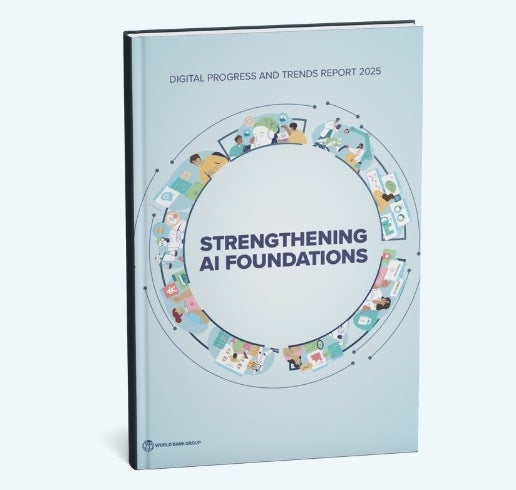
The World Bank’s 2025 Digital Progress Report shows AI spreading rapidly among people but slowly among firms—highlighting major risks and opportunities for small businesses, especially in emerging markets, where adoption gaps are widening.
AI’s New Divide: What the World Bank’s 2025 Digital Progress Report Means for Small Businesses
Artificial intelligence is reaching hundreds of millions of people at unprecedented speed. Yet, according to the World Bank’s Digital Progress and Trends Report 2025, most small businesses—especially in developing economies—remain on the sidelines. This fast-moving gap matters. It will shape who benefits from AI-driven growth, which business models survive, and whether ecosystems can keep pace with accelerating global competition.
We can see this report as an early warning or a practical roadmap: AI can unlock new opportunities for small and growing businesses (SGBs), but only if ecosystems adapt quickly and inclusively.
AI for People, Not Yet for Firms
The headline finding is striking: over half a billion people have used generative AI tools within two years of their launch, including workers and students across middle-income countries. But intentional adoption by firms remains limited—only about 8 percent of companies in advanced economies and far fewer in lower-income markets.
This divergence creates a new kind of digital divide. Individuals may become proficient AI users, but small enterprises risk falling behind unless they can integrate AI into real operations: marketing, customer service, logistics, and product development.
For entrepreneur support organizations, ESOS, the priority is shifting from building AI start-ups to accelerating AI-enabled SMEs.
Small Firms Stand to Gain—If They Don’t Get Squeezed
The report is unusually clear about AI’s dual effect on small businesses. On one hand, AI dramatically lowers the cost of knowledge. It can help a small enterprise produce market analysis, financial models, back-office automation, and customer engagement strategies at a fraction of the time and cost.
On the other hand, AI intensifies scale advantages. Large, data-rich firms move faster, automate more efficiently, and dominate digital markets. Without intervention, AI risks widening productivity gaps between small and large firms, and between advanced and emerging economies.
This is the central tension for SGB ecosystems: AI can democratize opportunity—but only if adoption is actively supported.
Digital Services Exports Are Changing Fast
One of the report’s most relevant sections focuses on digitally deliverable services—software development, BPO, creative services, and back-office processing. These sectors have powered job creation from Manila to Nairobi. But AI is reshaping the landscape.
Tools like GitHub Copilot can cut coding time in half. AI-powered call summarization significantly reduces call-center handling time. These advances raise productivity but risk displacing routine, task-based roles that many small providers rely on.
The message is clear: ecosystems need to help service-oriented SGBs move up the value chain—from manual outsourcing to AI-enhanced, higher-value services such as data analytics, specialized content generation, and sector-specific software.
The 4Cs: A Practical Roadmap for Inclusive AI Adoption
The World Bank proposes a four-part foundation for countries aiming to benefit from AI: connectivity, compute, context, and competency. These categories translate directly into priorities for entrepreneurial ecosystems.
- Connectivity: Many SGBs still operate with unreliable broadband and electricity. Programs that assume high-quality cloud access will reach only the better-resourced minority.
- Compute: AI is becoming a cloud-first technology, making access to affordable credits, shared infrastructure, and local innovation spaces essential.
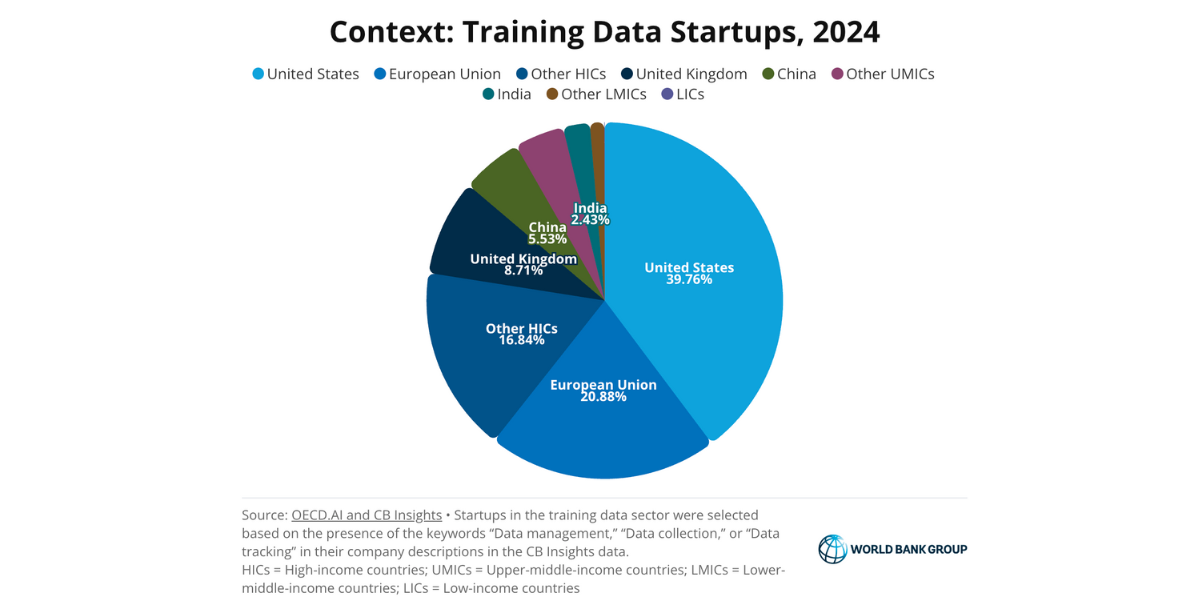
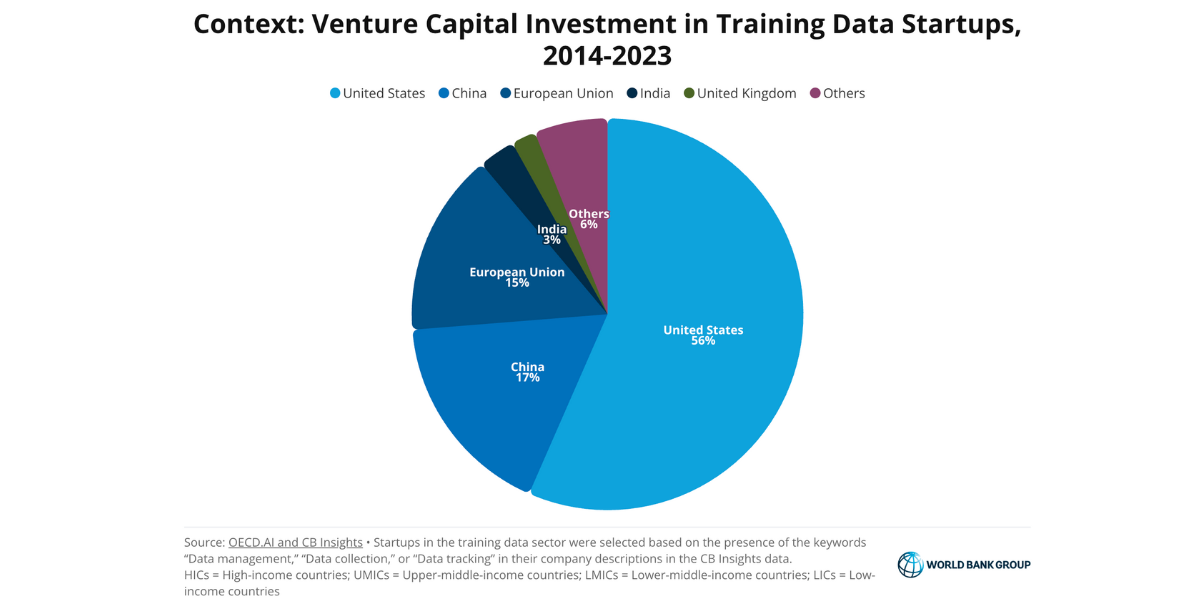
- Context: Most advanced use cases require localized data, interfaces, and regulations. This opens opportunities for entrepreneurs to build solutions tailored to local languages and markets.
- Competency: Across the report, one recommendation stands out—make AI skills affordable for SMEs. Countries with mid-level readiness should invest in practical, modular training for business owners and workers, not just AI specialists.
ANDE members working directly with SGBs are well-positioned to activate these foundations, especially through training, sector partnerships, and local applications.
Policy and Ecosystem Levers That Matter
The report highlights several interventions that can strengthen small business competitiveness:
- Targeted SME support: Subsidized training, technical assistance, and lightweight onboarding for AI tools can accelerate practical adoption.
- Shared infrastructure: Governments and ecosystem builders can expand access to cloud credits, sandboxes, and digital public infrastructure.
- Diversification in vulnerable sectors: In places heavily dependent on basic BPO, strategies should combine upskilling with incentives to develop more complex AI-enabled services.
- Regulatory clarity: Predictable rules on data use and cross-border flow are critical for trust and investment.
- Competition policy: Preventing winner-takes-all dynamics in cloud and data markets protects space for smaller firms.
These levers can help counter the structural disadvantages that AI may amplify.

For ANDE and its members, the message is unmistakable: AI will not wait. SGB ecosystems must evolve from general digital literacy support to targeted AI-enabled business transformation.
- Shift the focus from AI start-ups to AI adoption across sectors.
Everyday businesses—from micro-retailers to agritech SMEs—need hands-on help integrating new tools. - Use the 4Cs to diagnose ecosystem bottlenecks.
Mapping which constraint—connectivity, compute, context, or competency—is binding can guide investment and program design. - Elevate AI-ready service sectors.
Digital services offer export growth opportunities, but transitioning SGBs into higher-value roles requires coordinated support on skills, technology, and market access.
AI can expand economic participation or deepen inequality. The difference will depend on how quickly and inclusively countries and ecosystems act. For entrepreneurs across emerging markets, the window is narrow but full of potential. Now is the moment to ensure small businesses are not left behind in the next wave of digital transformation.
Interested in ecosystem transformation and not an ANDE member? Learn more about the benefits of membership. Subscribe to ANDE’s newsletter for updates on the agenda, speakers, and registration for the Global Annual Conference 2025.