
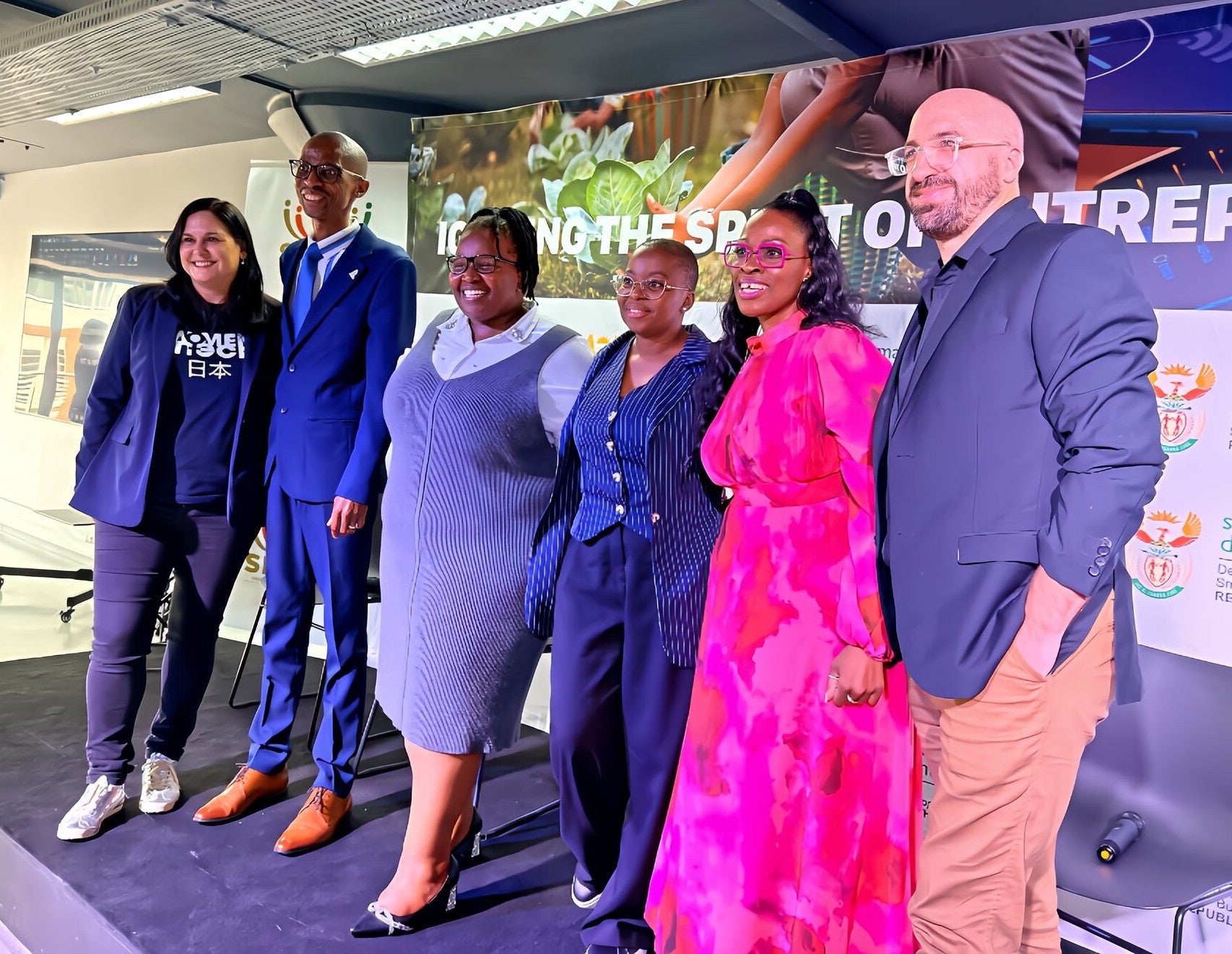
ANDE participated in the final consultation on South Africa’s National Entrepreneurship Strategy (NES), convened as an official pre-event of the State of the Nation Address (SONA). Ercilia Mata Ubisse, ANDE’s Regional Chapter Head for Southern Africa, represented the organisation on the Innovation and Partnerships panel, contributing ecosystem-level insights to a conversation that signals entrepreneurship’s growing prominence on the national policy agenda.
This engagement builds on ANDE’s sustained participation in the NES consultation process since November 2024. Over the past year, ANDE has contributed to discussions on ecosystem alignment, innovation pathways, and implementation coordination, reinforcing the importance of a systems approach to entrepreneurship development.
Strategy Sets Direction. Systems Deliver Results
South Africa does not lack entrepreneurship institutions. Research bodies, innovation agencies, incubators, accelerators, funders, and corporates are active across the country. Yet many entrepreneurs still stall between prototype and market, miss financing windows, or lose momentum navigating fragmented support systems.
The challenge is not the absence of programs. It is the absence of clear pathways that move entrepreneurs to the right support at the right time.
That tension sits at the heart of ANDE’s 2026 strategic focus: systems matter. Ecosystems must move resources, not simply host initiatives.
The Real Constraint: Pathways, Not Programs
The consultation reinforced a critical ecosystem insight: capacity exists — flow does not. Entrepreneurs often encounter friction at predictable transition points:
-
Stage clarity: understanding where to go first, second, and third
-
Readiness signals: knowing what “innovation-ready” or “investment-ready” means in practice
-
Handoffs: moving effectively from pilots to buyers, contracts, and scaled markets
Without clear mechanisms, founders lose time, miss financing windows, and stall between support providers. Discussions therefore focused less on launching new initiatives and more on strengthening implementation — clarifying ownership, measurement, and adaptive learning across partners.
This reflects ANDE’s strategic emphasis on building ecosystems that move resources.
From Policy Commitments to Measurable Shifts
The NES acknowledges structural challenges shaping South Africa’s entrepreneurship landscape, including lower entrepreneurial participation compared to peer economies, limited MSME job creation, and persistent barriers to market access, finance, and opportunity. In response, the Strategy prioritizes five areas:
-
Entrepreneurship education and skills development
-
Technology exchange and innovation
-
Access to finance and markets
-
Regulatory optimization
-
Awareness and networking
The implementation plan emphasizes pilot projects, structured governance through NES steering mechanisms, and coordinated delivery with ecosystem partners. The focus is not expansion of programs, but measurable shifts in how entrepreneurs move through the system — accessing innovation support, reaching markets, and benefiting from aligned institutional action.
The test ahead is whether these commitments translate into functional pathways that reduce friction and strengthen resource flow.
ANDE’s Role: Strengthening the Connective Tissue
If pathways are the constraint, ANDE’s role becomes clear. ANDE contributes by strengthening mechanisms that enable ecosystem flow:
-
Convening around shared bottlenecks: bringing actors together to identify where entrepreneurs get stuck and unlock priority pathways
-
Mapping navigation journeys: aggregating existing offerings into visible, stage-based referral pathways
-
Defining success signals: aligning partners around measurable indicators such as reduced drop-offs, faster referrals, and clearer readiness criteria
-
Translating insight into decisions: ensuring ecosystem intelligence informs implementation mechanisms and policy adjustments
Through this work, ANDE moves from consultation to practice — reinforcing the connective tissue that enables capital, knowledge, and opportunity to reach entrepreneurs more efficiently. ANDE’s engagement in the NES builds on its participation in global entrepreneurship policy conversations, including Startup20 (SU20) and its contribution to advancing the Global Entrepreneurship Exchange (GEX) recommendation within G20 ecosystem discussions.
Across these forums, one principle is consistent: entrepreneurship reform succeeds when implementation mechanisms are as strong as policy ambition. South Africa’s NES reflects this systems-oriented perspective in a national context, presenting an opportunity to translate strategy into operational pathways.
What Comes Next?
Following the consultation, the focus now shifts from dialogue to delivery. ANDE will work alongside ecosystem partners to map practical referral pathways across existing support services, establish shared indicators of what effective navigation looks like, and translate consultation insights into implementation decisions that directly benefit entrepreneurs. The objective is clear: to improve how the system functions for entrepreneurs already operating within it. While strategy provides direction, progress will ultimately be measured by the extent to which policy intent is converted into accessible, coordinated pathways. ANDE remains committed to strengthening entrepreneurial ecosystems that unlock resources, address bottlenecks, and make support more navigable in practice.