
Artificial Intelligence (AI) is rapidly becoming part of everyday work across the social impact sector, but for many organizations, the challenge is no longer whether to adopt AI; it is how to do so responsibly and effectively. This session brought together practitioners who are actively integrating AI into their organizations, offering participants practical frameworks, real-world experiences, and live demonstrations that showed how AI can strengthen impact while keeping human judgment at the center.
The session opened with Shyama Sinha, Director of Solutions Engineering at Vera Solutions, introducing a practical framework to help Entrepreneur Support Organizations (ESOs) move from AI curiosity to capability. Acknowledging that organizations are at different stages of their AI journey, she emphasized that successful adoption is less about choosing the latest tool and more about building the right foundations. Instead of treating AI readiness as a checklist, she encouraged participants to view it as an ongoing process that evolves with an organization’s needs, learning, and experience.
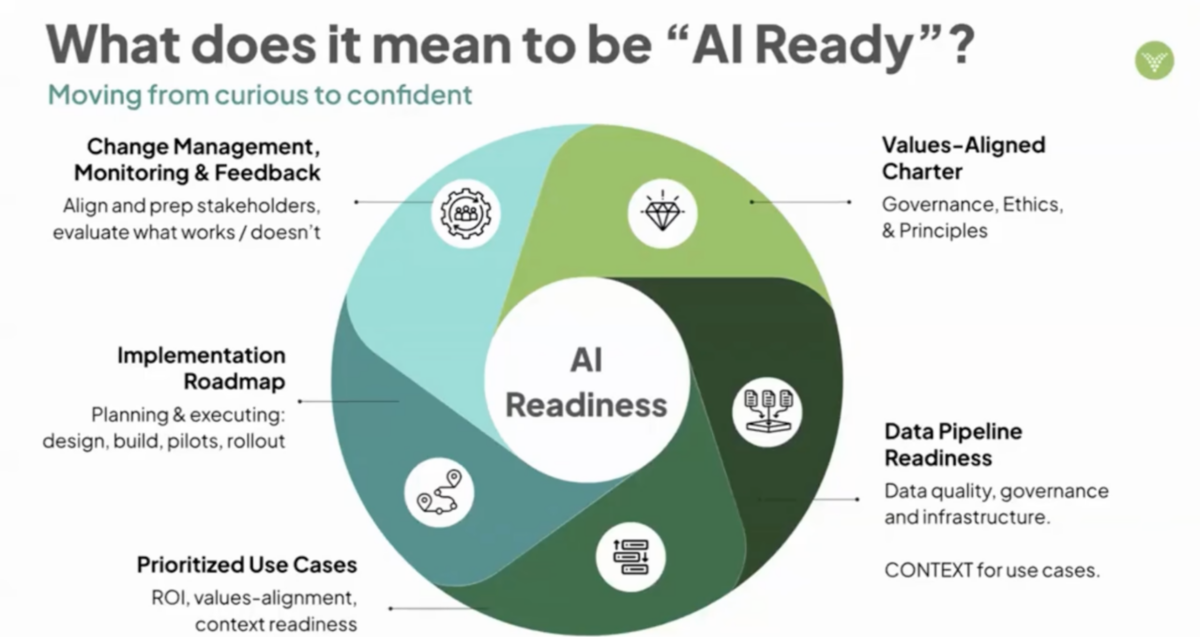
At the heart of the discussion was Vera Solutions’ five-pillar AI readiness framework, which guides organizations through responsible AI adoption. The framework begins with establishing a values-aligned charter to ensure AI is governed by clear ethical principles, followed by strengthening data systems, identifying high-impact use cases, creating an implementation roadmap, and investing in change management so teams have the confidence and skills to adopt AI effectively. Throughout the presentation, Shyama stressed that organizations do not need large budgets or advanced technical expertise to get started. Instead, progress begins with small, intentional steps, such as identifying a single use case, improving data quality, encouraging responsible experimentation, and empowering internal AI champions to build momentum across the organization.
Building on Vera Solutions’ AI readiness framework, Ambareen Baig, PMU and Insights Manager at Accelerate Prosperity, shared her organization’s own AI adoption journey. She explained that their approach has been guided by a simple principle: AI should not be adopted for its own sake, but only when it creates meaningful value for entrepreneurs and the communities they serve. From improving internal workflows and data analytics to developing AI-enabled products for beneficiaries, every use case has been evaluated through the lens of impact rather than novelty.
Ambareen also offered an honest reflection on the realities of implementation. She highlighted common challenges, including fragmented experimentation across teams, concerns around data quality and security, and the risk of unintentionally reinforcing bias when AI is trained on historical data. These considerations are particularly important for organizations working with women entrepreneurs, people with disabilities, and other underserved groups, where fairness and inclusion must remain central. Rather than pursuing large-scale transformation, Accelerate Prosperity has focused on piloting one use case at a time, keeping humans in the loop for high-value decisions, and building organizational confidence through continuous learning. Her experience reinforced the session’s broader message that responsible AI adoption is driven by intentionality, strong governance, and a clear focus on creating equitable outcomes rather than by the technology itself.
In her presentation, Renée Hunter, Associate Director of Advisory Services at Value for Women, shared her organization’s evolving approach to AI adoption, describing it as being somewhere between the “piloting” and “integrating” stages. Rather than pursuing a single transformative AI solution, she emphasized the value of solving practical, everyday challenges through incremental adoption. From streamlining administrative tasks to creating an internal AI working group where early adopters can experiment and share learnings, Hunter illustrated how small, tangible successes can build trust and confidence across an organization. She also noted that the biggest barriers to AI adoption are often human rather than technical, with teams requiring different types of support depending on their learning styles and comfort levels.
Renée also encouraged participants to think beyond efficiency and consider AI’s long-term impact on the social sector. While AI can help identify patterns, surface blind spots, and reduce bias in certain processes, she cautioned against becoming overly reliant on technology for decisions that require human judgment. She argued that inclusion, empathy, and critical thinking are skills that organizations must continue to cultivate, with AI serving as a tool to inform decision-making rather than replace it. She offered a balanced perspective on responsible AI adoption, reinforcing that the greatest value of these tools lies in strengthening human capability, not substituting it.
Prateek Gupta, Product Lead at Vera Solutions, followed with a live demonstration showing how AI can help organizations turn fragmented data into actionable insights. Using a hypothetical social enterprise as an example, he illustrated how AI can connect multiple data sources, such as spreadsheets and survey platforms, to automatically generate impact reports, identify trends, and flag potential risks in minutes rather than days. The demonstration showed how AI workflows can combine qualitative and quantitative data, provide transparent reasoning, and maintain human oversight through permission-based access and validation checks, enabling organizations to make faster, evidence-based decisions without compromising accountability.
Prateek also encouraged participants to adopt an experimental mindset by starting with small, high-impact use cases before scaling AI across their organizations. He introduced participants to a range of open-source AI models worth exploring and emphasized the importance of establishing organizational principles and governance before deployment. The session concluded with a showcase of Quintile, Accelerate Prosperity’s AI-powered knowledge and insights platform, which brings together investment data, ecosystem reports, and trusted research into a searchable, interactive resource. By grounding AI responses in verified data rather than the open internet, the platform demonstrated how AI can help ecosystem stakeholders access reliable insights while ensuring that human judgment remains central to decision-making.
Across every presentation, one message stood out: successful AI adoption is not defined by sophisticated technology, but by thoughtful implementation. Whether through strong governance, incremental experimentation, better use of data, or a continued emphasis on human expertise, the speakers demonstrated that AI delivers the greatest value when it complements, not replaces, the people driving social impact. For ESOs beginning their AI journey, the session offered both a realistic roadmap and the confidence to start small, learn continuously, and scale with purpose.

Day 1 of the ANDE PAC 2026 focused on the foundations of strong entrepreneurial ecosystems. Across keynote discussions and thematic sessions, speakers explored how collaboration, data-driven decision-making, inclusive program design, and ecosystem partnerships can create the conditions for entrepreneurs to thrive.

Day 2 of the ANDE Pan-Asia Convening 2026 explored practical approaches to supporting entrepreneurs through stronger ecosystems.
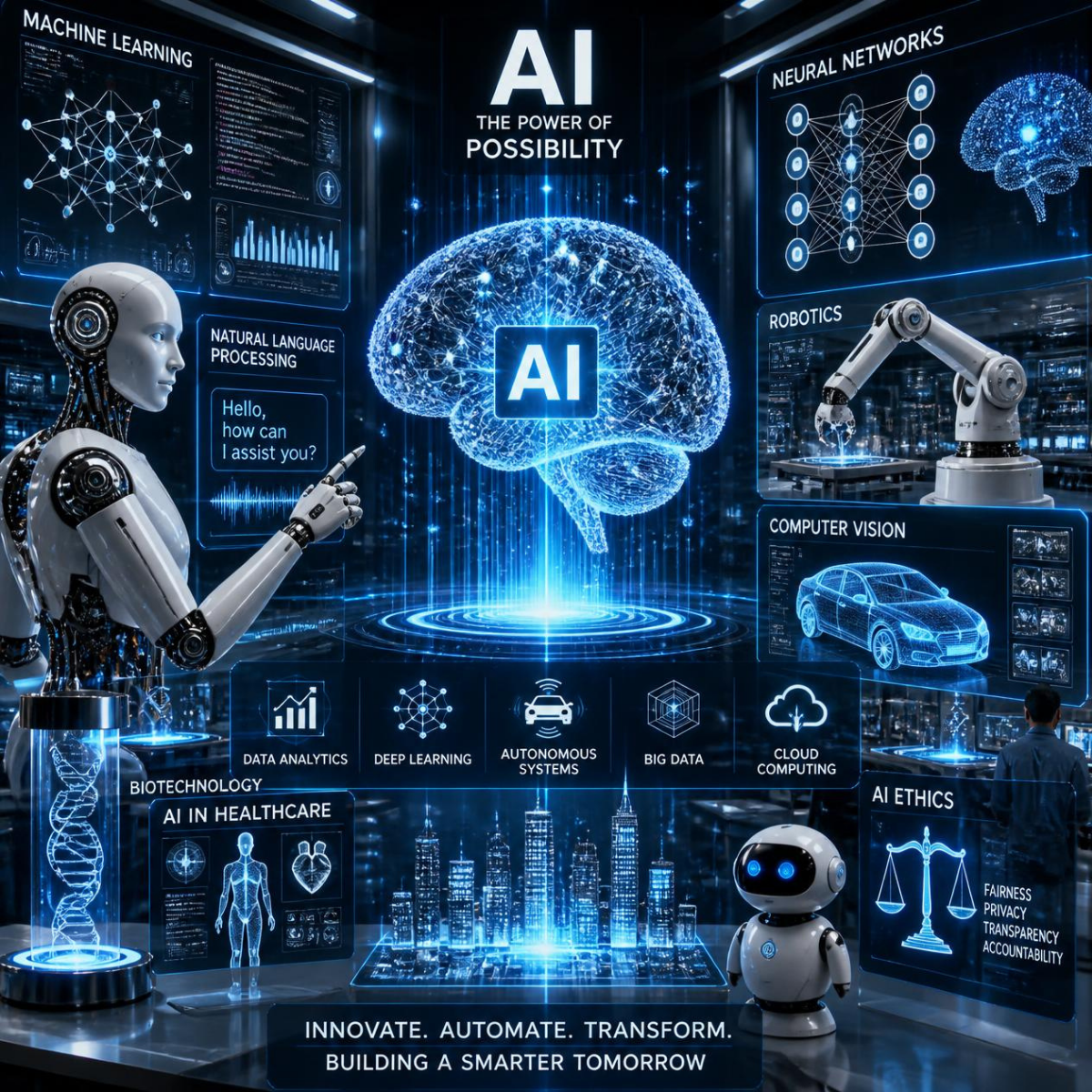
Day 3 of the ANDE Pan-Asia Convening 2026 focused on one of the defining questions facing entrepreneurial ecosystems today: how can artificial intelligence (AI) be adopted in ways that strengthen, rather than replace, human expertise?

Through discussions around the Gender ROI™ framework, this session, led by Sweef Capital, encouraged participants to examine their internal practices, decision-making processes, and capital allocation strategies, offering practical tools to measure and strengthen gender-inclusive outcomes.

Human or AI? Our lively, hands-on session co-led with Satu Creative explored why trust, intuition, ethics, and purpose continue to matter in business, investing, and ecosystem building, even as AI transforms the way we work.