The CIFAR Alliance is joining ANDE, pairing climate-finance expertise with a global network so capital reaches the businesses building resilience.
Every year, billions are set aside for climate adaptation and resilience, but much of this money never reaches local businesses. Funds often remain with large institutions, while local organizations may not have the technical know-how to access them. At the same time, global investors want to support ready businesses but have trouble finding them. As a result, the money and the businesses that need it often do not connect.
ANDE members are familiar with this challenge. They work directly with entrepreneurs who are building climate-resilient businesses and know their markets well. Still, many find it hard to meet the technical requirements of climate funds, which often use different metrics and require new relationships. The expertise needed has mostly been found in a different community.
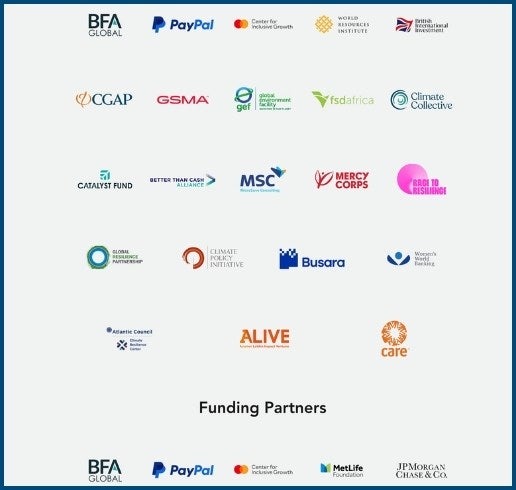
This community is the Climate Innovation for Adaptation and Resilience (CIFAR) Alliance, which is now joining ANDE’s network. Founded in 2021 by BFA Global, CIFAR brings together 22 institutions working at the intersection of climate and finance. Through its Co-Labs, CIFAR has developed more than 15 practical knowledge products and connected over 100 organizations and 2,500 participants at Regional Climate Weeks and recent COP events.
Each organization brings something valuable. ANDE has a wide reach, with over 200 member organizations and eight regional chapters in Africa, Asia, and Latin America. It supports more than 200,000 small and growing businesses every year. CIFAR brings specialized knowledge in climate adaptation and resilience finance. Together, we want to connect strong climate-resilient businesses with the capital they need to grow.
Adaptation is no longer optional for climate vulnerable communities — it’s a question of economic survival. By integrating with the Aspen Network of Development Entrepreneurs, the CIFAR Alliance is scaling a powerful ecosystem connecting capital, innovation, and communities on the frontlines of climate change,” said Graham Wright, group managing director of MicroSave Consulting and co-chair of the CIFAR Alliance.
For ANDE members, this change is practical. It gives them better access to tools for financing climate-resilient businesses and connects them to a community focused on resilience finance.
“Climate adaptation is, at its core, an enterprise and livelihoods challenge, and many ANDE members are already working on it around the world. CIFAR brings them deeper expertise in resilience finance and a clearer route to the capital these businesses need,” said Peggy Clark, Vice President of the Aspen Institute.
The work will continue within ANDE. CIFAR will keep focusing on vulnerable communities and maintain its own identity, now supported by a larger network. Over the next year, climate-focused work will be part of ANDE’s events and regional chapters. Adaptation finance was a major topic at COP30, and this partnership offers a practical way to move money from where it is promised to where it is needed.
If your organization works at the intersection of climate and finance, explore ANDE membership or contact the team for more information.
For press inquiries, write to:
Ben Berliner
The Aspen Institute
Ben.berliner@aspeninstitute.org
Interested in ecosystem transformation and not an ANDE member? Learn more about the benefits of membership. Subscribe to ANDE’s newsletter for updates on the agenda, speakers, and registration for the Global Annual Conference 2025.