Build inclusive distribution models that connect underserved markets to formal channels.
This content is also available in: Español
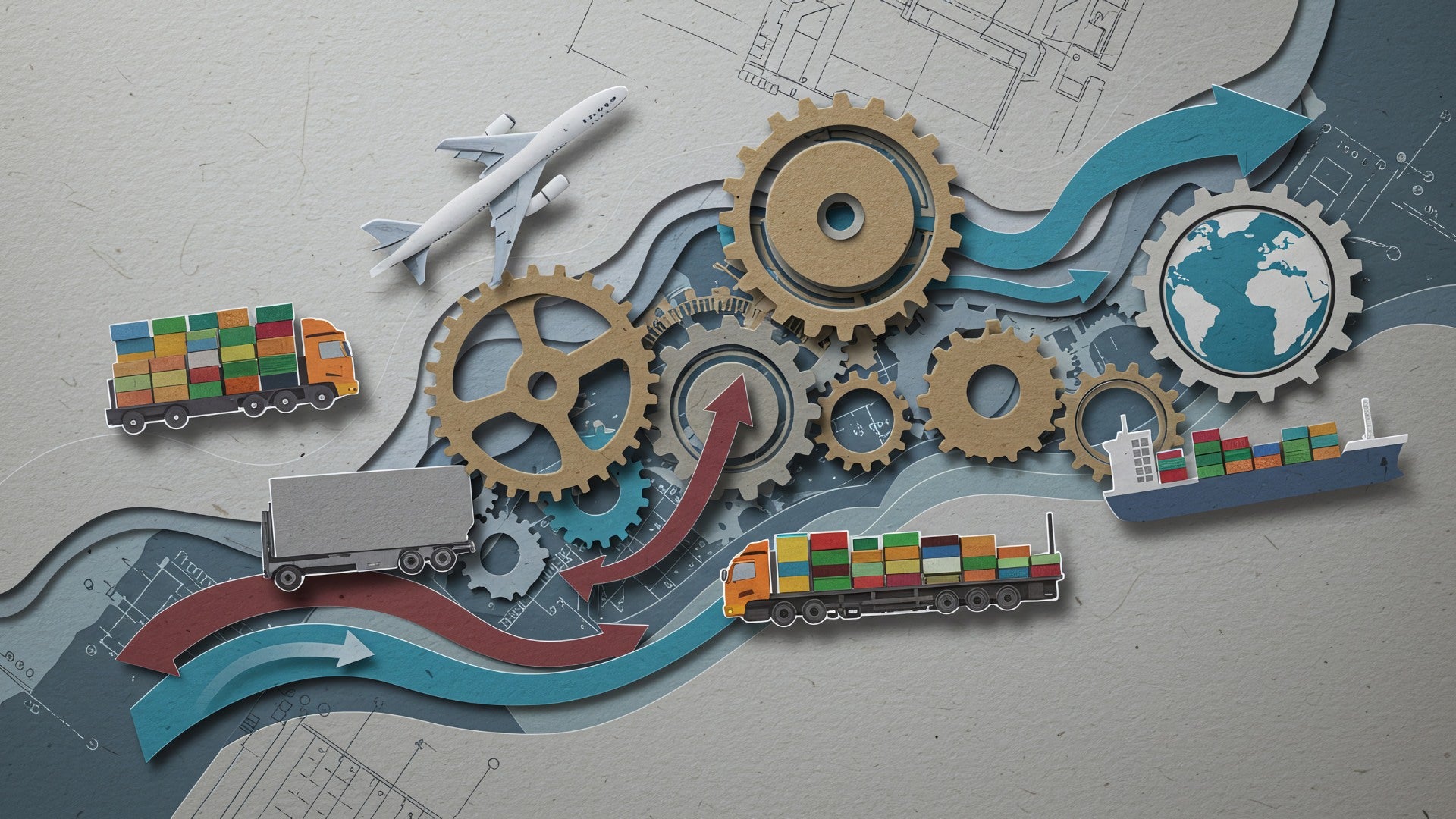
 Across the Global South, informal and last-mile entrepreneurs are essential to local economies—and central to how goods and services reach communities. Yet many remain excluded from formal distribution systems due to gaps in skills, finance, information, and market access.
ANDE partners with corporations, intermediaries, and Entrepreneur Support Organizations (ESOs) to strengthen the capabilities and market readiness of these entrepreneurs—so they can participate in more resilient, efficient, and inclusive distribution networks. The result is expanded market participation for entrepreneurs and stronger routes-to-market for corporate partners.
What this partnership model delivers
Corporate distribution partnerships work best when they combine market incentives with ecosystem capacity. ANDE helps partners design and deliver programs that can move from pilots to scale.
Outcomes we support
-
-
- Entrepreneurs gain access to formal channels through improved operational readiness, business skills, and networks
- Companies strengthen routes-to-market by working with more reliable, locally rooted distribution partners
- ESOs improve program quality through evidence-based tools, training, and performance measurement
- Ecosystems build durable capacity that can support entrepreneurs beyond a single project or market cycle
- Entrepreneurs gain access to formal channels through improved operational readiness, business skills, and networks
-
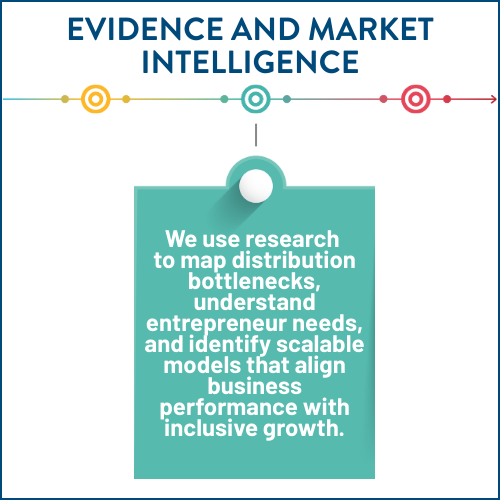
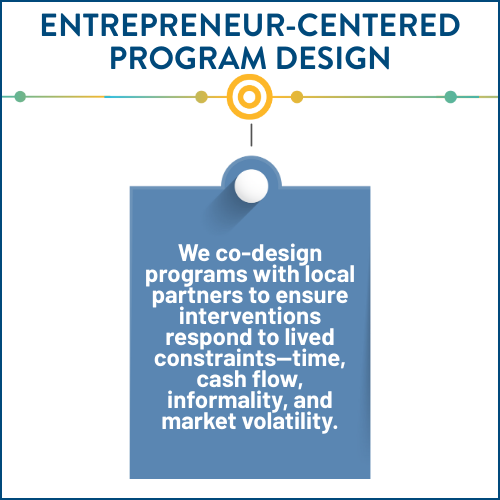
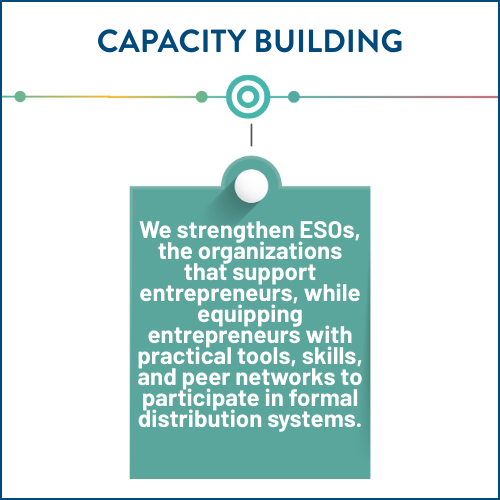
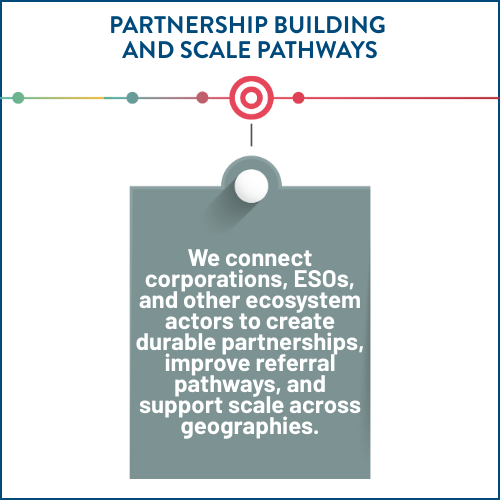
ANDE’s distribution partnerships combine four components

The Alliance builds a collaborative ecosystem where corporations transform supply chains into drivers of social change, aligning commercial goals with ESG metrics. Co-created alongside the JPMorganChase Foundation, CCMX, and New Ventures, this marks the official launch of the alliance in Mexico. In collaboration with allies like Ekhos and ChangeLab, we are hosting a hybrid, 6-session Masterclass from June to August 2026 for companies looking to lead responsible sourcing.
Led by ANDE Brazil with Yunus Social Business, Ecoa connects corporations and ecosystem partners to advance inclusive and sustainable procurement. If large buyers rethink how they source and make it easier for verified impact businesses to compete, global supply chains can shift from a cost center to a measurable driver of environmental results. New tools built through shared intelligence are turning intent into repeatable, trackable transactions.
Co-created with the Walmart Foundation and implemented in partnership with the African Management Institute (AMI), the Kasipreneur Impact Project (KIP) demonstrates how corporate collaboration builds scalable solutions. KIP strengthens ESOs and equips township entrepreneurs with the skills, tools, and connections needed to access formal distribution opportunities. The program combines evidence-based research to improve how support is delivered and measured.
While partnership design varies by market and sector, our distribution work often concentrates on:
 Last-mile distribution and market access for informal and micro-entrepreneurs.
 Entrepreneur readiness (operations, inventory management, pricing, and customer strategy).
 ESO capability building (program design, delivery quality, and measurement).
 Inclusive distribution models that improve access to essential goods and services.
 Pathways to formalization where relevant and entrepreneur-led.
Choose the engagement that fits your goals:
-
-
- Co-design a distribution partnership in a priority market
- Support an ESO capacity-building initiative linked to your route-to-market strategy
- Fund research and market intelligence to identify scalable inclusive distribution models
- Partner on measurement and learning to improve program effectiveness and replication
- Co-design a distribution partnership in a priority market
-
Corporations and foundations looking to:
-
-
- Strengthen distribution ecosystems in priority markets
- Improve the reliability and inclusiveness of routes-to-market
- Develop partner models that can scale responsibly across regions
- Combine commercial performance with measurable economic empowerment outcomes
- Strengthen distribution ecosystems in priority markets
-