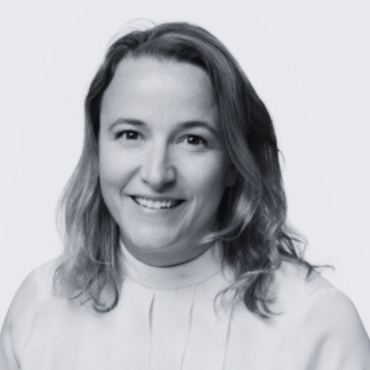
In this edition of ANDE Member Spotlight, we speak with Amalia Johnsson, CEO of Hand in Hand International, about the organization’s work to help women micro-entrepreneurs build stronger businesses and create lasting economic opportunities. With more than 15 years of experience in international development, financial inclusion, and rural livelihoods, Amalia has worked across the public, private, and nonprofit sectors, advising leading development agencies, financial institutions, and philanthropic organizations. Before joining Hand in Hand International, she led financial sector development at Nathan Associates and previously held roles at Plan International UK, the OECD, and in the UK financial industry. She holds a master’s degree in International Affairs from Columbia University and a bachelor’s degree in Economics from the University of Cambridge.
In our conversation, Amalia shares how Hand in Hand International is challenging conventional thinking about women micro-entrepreneurs, why business acceleration should be more inclusive, and where she sees the greatest opportunities for collaboration across the entrepreneurial ecosystem. From scaling locally led solutions to strengthening access to finance, she offers insights into what it takes to help overlooked entrepreneurs grow thriving businesses and create jobs.
ANDE: Introduce us to your organization and how you see its role within the SGB ecosystem. What are the core tenets of your work.
Amalia Johnsson: Hand in Hand International supports a critically underserved segment of micro entrepreneurs, helping them rapidly grow their enterprises’ revenue and profits. We do this with advanced entrepreneurship training, access to credit facilities, sector specific market linkages and tailored coaching. Supporting this segment of the SGB ecosystem is one of the most powerful ways to achieve inclusive economic growth for women, driving down poverty and igniting local economies.
Hand in Hand International is part of the global Hand in Hand network, which includes India, Kenya, Tanzania and Afghanistan. We believe sustainable, long-term change must be locally led, ensuring decision-making power stays within the communities we serve for better long-term outcomes.
Our approach delivers measurable results: women supported through our livelihoods programs typically double their incomes. Driven by a strong culture of innovation, we scale what works, advancing solutions in credit access and digital inclusion so women-led businesses can grow, thrive, and drive lasting economic change.
ANDE: Share an exciting update or ongoing project that propels your organization towards new frontiers or underscores its dedication to its mission.
Amalia Johnsson: We recently launched “From needs-based entrepreneurs to SGB business owners – acceleration that works for everyone” to challenge the assumption that low-income women entrepreneurs are merely ‘entrepreneurs of necessity’. We wanted to demonstrate that they have the same potential to scale as anyone else.
The private sector has a critical role to play in driving jobs and economic growth. Business accelerators are part of that shift – but most are designed for a narrow segment of entrepreneurs: often male, often university educated. Meanwhile, women at the lower end of the income scale are left behind, viewed only as ‘needs-based’ entrepreneurs.
Take Kenya. Its 7.4 million MSMEs generate over 40% of the country’s GDP, yet around 98% of these enterprises are classed as micro – tiny, informal operations employing one or two people. These are the businesses traditional acceleration programs overlook, despite their enormous potential to drive growth.
ANDE: What aspects excite you most?
Amalia Johnsson: What excites me most is the proof that, with the right support, women micro-entrepreneurs can build resilient, growing businesses. Over the past five years, Hand in Hand International has piloted grassroots accelerators tailored to women living just above the poverty line.
By combining intensive training, mentoring, digital skills development, market connections and access to finance, we have reached more than 10,000 entrepreneurs – typically increasing incomes by 85% within a two-year period.
ANDE: How do you anticipate its evolution?
Amalia Johnsson: Our goal is to move women into the lower middle-income bracket – around $15 a day – and toward long-term economic security. At this level, they can meaningfully and resiliently move out of poverty while becoming employers themselves – generating jobs and contributing to economic growth.
Between now and 2030, we are focused on refining the model for scale, reaching 50,000 entrepreneurs across Kenya and Tanzania. This phase will strengthen our gender-responsive approach, improve return on investment, and build the evidence base needed for wider replication.
ANDE: Please discuss how your efforts align with ANDE’s critical issues and how our network has bolstered or could enhance your work.
Amalia Johnsson: Hand in Hand’s objectives – equipping women entrepreneurs with the skills and resources to building thriving small and growing businesses (SGBs) – strongly align with ANDE’s aim to strengthen the SGB ecosystem globally.
Joining the ANDE network marks an important step in scaling our business acceleration work. With over a decade of experience supporting this segment of entrepreneurs, we are well placed to contribute practical insights and lessons learned from our programs. At the same time, we look forward to engaging with peers across the network to strengthen our own approaches, particularly in areas like impact measurement where we want to collect the most relevant and reliable data, to understand business growth and address gender-specific barriers within the SGB ecosystem.
Through ANDE, we also hope to expand our profile within the sector, participate in events and knowledge exchanges, build strategic partnerships, and connect with investors and organizations that can help accelerate the scale and impact of our work.
ANDE: Explore potential synergies with ANDE members and the wider community. What insights or practices from your experience could benefit others? Also, how would you expect the network to benefit your organization’s goals, reach, and impact? How would you like to rely on ANDE?
Amalia Johnsson: As Hand in Hand enters the ‘validation’ phase of our acceleration strategy, we look forward to further demonstrating that this group of entrepreneurs has enormous potential to create value. We are eager to share our acceleration strategy with others, as it outlines and evidences our approach to supporting this overlooked segment of entrepreneurs.
Many of our peers work with higher income entrepreneurs who face similar structural barriers to growth. We are keen to learn from members’ approaches to addressing these challenges, while also contributing our perspective on the opportunities that exist when supporting micro-entrepreneurs who begin at a much lower income. In particular, we hope to highlight the value of investing in women micro-entrepreneurs as a powerful pathway to poverty alleviation and inclusive economic growth.
Other insights we hope to share:
Gender – How do we overcome barriers specific to women, such as limited access to networks, finance and markets, digital exclusion and online harassment? We are also exploring how to navigate shifting household dynamics when women experience rapid income growth.
Financial inclusion – We are establishing an innovative financing solution to guarantee loans for acceleration participants and reduce barriers to credit. Improved business practices and financial linkages alone have not proven sufficient to address this critical constraint to growth, and we are testing new approaches to unlock capital at scale.
Rural value chains – How can the acceleration model be adapted to work effectively for agri-entrepreneurs operating in rural contexts?
As a network of independent, locally led organisations, we’re excited to join local knowledge-sharing platforms. And, as we refine and strengthen our methodology, we are equally keen to make full use of the Impact Measurement Resource Hub to strengthen our evidence base and impact measurement approach.
Our ambition is for our acceleration model to successfully reach 50,000 entrepreneurs across Kenya and Tanzania, supporting them to increase their incomes to the lower middle-income benchmark of $15 a day – we know we can achieve this much more effectively in collaboration with peers and partners.